A missing tooth can affect far more than one small space in your smile. You may find yourself chewing on one side, covering your mouth in photographs or feeling conscious when speaking at close range. The top benefits of single tooth implants lie in their ability to replace both the visible tooth and the support beneath it, creating a solution designed to feel stable, look natural and protect your wider oral health.
For many patients, a single dental implant is an alternative to a removable partial denture or a conventional bridge. It is not automatically the right option for every gap, but it can be an excellent long-term choice when the mouth is healthy enough to support treatment and the plan is carefully tailored.
What is a single tooth implant?
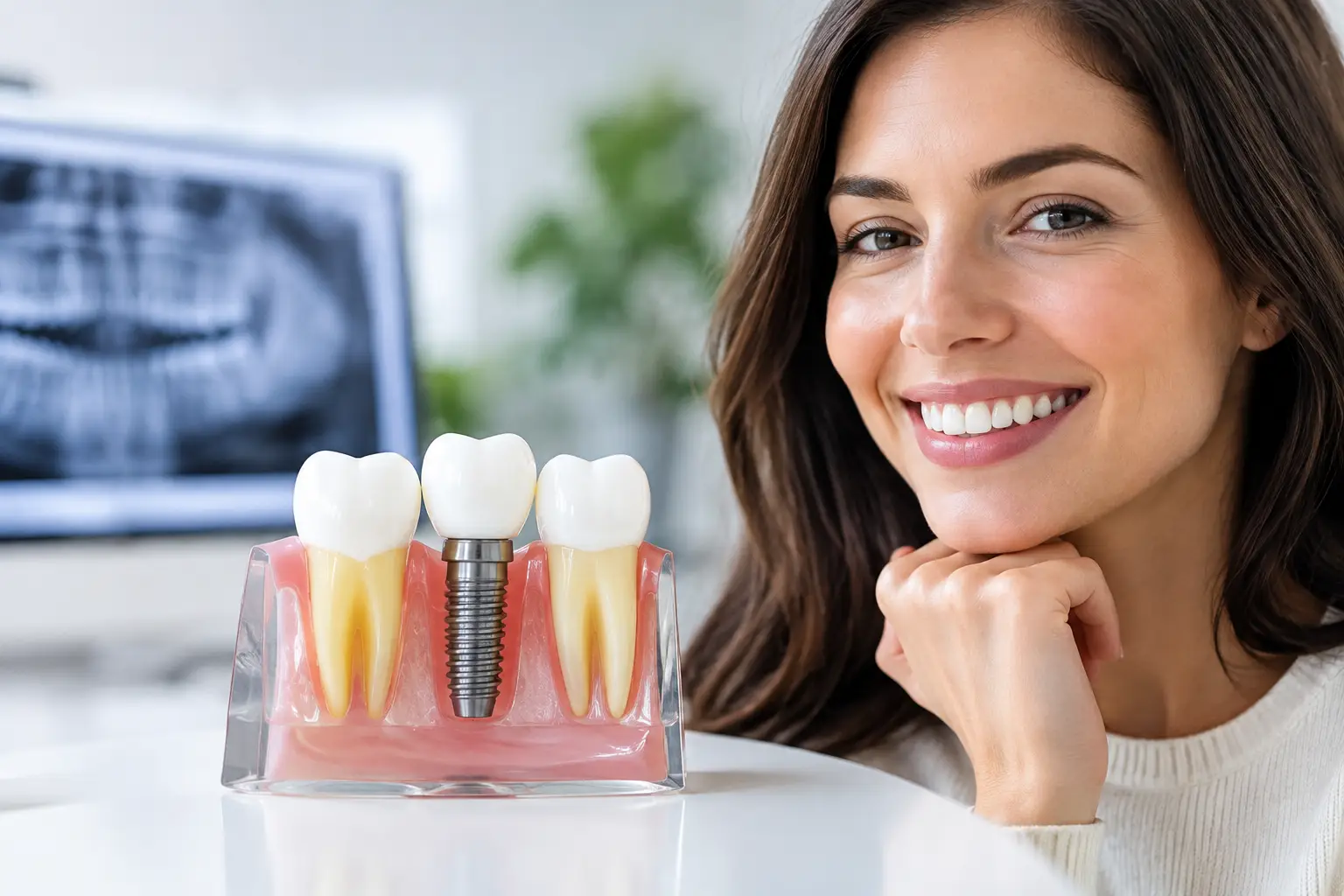
A single tooth implant replaces one missing tooth without relying on the teeth either side of the gap. A small titanium implant is placed in the jawbone to act as an artificial tooth root. After a period of healing, an abutment and a custom-made crown are fitted above it.
The crown is the part that shows when you smile, while the implant sits beneath the gum line. This matters because it allows the replacement tooth to be supported independently, rather than attached to neighbouring teeth. Planning includes an examination of your gums, bite, available bone and the appearance of the surrounding teeth, so the final result is designed around your individual smile.
Top benefits of single tooth implants for your smile and function
A fixed replacement that feels secure
One of the most valued advantages is stability. Because an implant is anchored in the jaw, it does not move when you eat, laugh or speak in the way a removable tooth replacement sometimes can. Once treatment is complete, patients can usually care for the implant crown as part of their usual daily routine, with brushing, interdental cleaning and regular dental reviews.
This security can make ordinary moments feel less demanding. Eating out, giving a presentation or simply talking without thinking about a gap becomes easier when the replacement tooth is fixed in place.
Natural-looking results, designed for your teeth
A well-planned implant crown is made to sit comfortably alongside your natural teeth. Its shape, shade and surface character can be chosen to complement the rest of your smile, rather than appearing noticeably uniform or artificial.
This is particularly important for a front tooth, where small details can affect the overall result. The gum contour, the position of the neighbouring teeth and the amount of visible tooth when you smile all influence planning. A crown may be made with porcelain or another high-quality restorative material, depending on the clinical and aesthetic requirements.
No restoration can perfectly recreate a natural tooth in every respect, but thoughtful implant treatment aims for a result that is convincing in everyday conversation, photographs and close social settings.
Protection for neighbouring healthy teeth
A traditional bridge can be a suitable solution in some circumstances, especially where the teeth beside the gap already need crowns. However, a conventional bridge often requires those neighbouring teeth to be prepared so they can support the replacement tooth.
A single implant stands independently. Where it is appropriate, this can preserve the healthy enamel and structure of the teeth on either side. Keeping natural tooth tissue intact is a meaningful consideration, particularly if those teeth are otherwise strong and unrestored.
Support for the jawbone and facial structure
When a tooth is lost, the section of jawbone that once supported its root receives less stimulation. Over time, this can contribute to bone shrinkage in that area. An implant transfers chewing forces into the jawbone in a way that more closely resembles a natural root, helping to maintain stimulation.
This does not mean an implant can reverse every change that has already occurred. If a tooth has been missing for many years, there may be reduced bone volume and additional treatment, such as bone grafting, may be considered before placement. Acting sooner is sometimes advantageous, but suitability always depends on clinical assessment rather than a fixed timescale.
Comfortable chewing and clearer speech
A missing tooth can make certain foods awkward to manage, particularly if the gap is at the back of the mouth. Replacing it with an implant-supported crown can restore a more balanced chewing pattern and help you enjoy a wider range of foods with confidence.
Speech may also be affected when a tooth is missing, particularly near the front of the mouth. A stable, properly shaped replacement can support clearer pronunciation. The outcome depends on the location of the tooth, your bite and how your mouth adapts, but many patients appreciate not having to accommodate a removable appliance.
A long-term approach to a single missing tooth
Dental implants are intended to be a durable option. With good oral hygiene, healthy gums and ongoing professional maintenance, the implant itself can last for many years. The crown may eventually need repair or replacement due to normal wear, changes in your bite or damage, but this does not necessarily mean the implant beneath it has failed.
Longevity is influenced by several factors. Smoking, gum disease, uncontrolled medical conditions, teeth grinding and inconsistent cleaning can all affect outcomes. This is why a consultation should include more than a discussion about the gap itself. The health of the whole mouth has a direct bearing on whether implant treatment is likely to serve you well over time.
When an implant may not be the immediate answer
The benefits are significant, but treatment requires time, planning and a commitment to aftercare. Implant placement is a surgical procedure, and healing before the final crown is fitted can take several months. In selected cases, a temporary replacement may be used while the area heals.
Cost is another practical consideration. A single implant commonly involves diagnostic imaging, surgery, components and a bespoke crown, so the initial investment may be higher than other replacement options. It is helpful to compare the full treatment plan, expected maintenance and likely lifespan of each option rather than focusing only on the first fee.
Not everyone is ready for implant placement straight away. Active gum disease should be controlled first, and some patients may require grafting where bone has reduced. A bridge or removable option may be more appropriate where surgery is not desired, where medical factors need further consideration or where budget and treatment timescale point towards a different route.
What to expect from a personalised implant consultation
A careful consultation is the starting point for a predictable result. Your dentist will assess the missing-tooth site, your gums and the condition of nearby teeth. X-rays or three-dimensional imaging may be used to check bone volume and to plan placement accurately around important structures.
The conversation should also cover what you want from treatment. For some people, the priority is being able to chew comfortably again. For others, it is restoring a visible part of the smile with a natural-looking result. Both goals matter, and they influence decisions about crown material, shade and the timing of treatment.
At Russell Avenue Dental & Implant Centre, implant planning is approached as an individual process, with time to explain the stages, likely healing period and the care required once your new tooth is in place. Clear expectations are a key part of feeling confident about any restorative treatment.
Caring for a single tooth implant
An implant cannot decay like a natural tooth, but the gum and bone around it still need protection. Brush twice daily, clean between your teeth as advised and attend routine hygiene and dental appointments. Your dentist or hygienist may recommend a particular interdental brush size or technique to keep the area around the crown and gum line clean.
If you clench or grind your teeth, a protective night guard may help reduce excessive pressure on the implant crown and your natural teeth. Report any bleeding, persistent discomfort, looseness or change in your bite promptly. Early attention can help prevent smaller concerns becoming more complex.
Choosing how to replace one missing tooth is a personal clinical decision, not a one-size-fits-all purchase. A detailed assessment can show whether a single tooth implant is appropriate for your mouth and give you a clear, realistic route towards eating, speaking and smiling with greater ease.