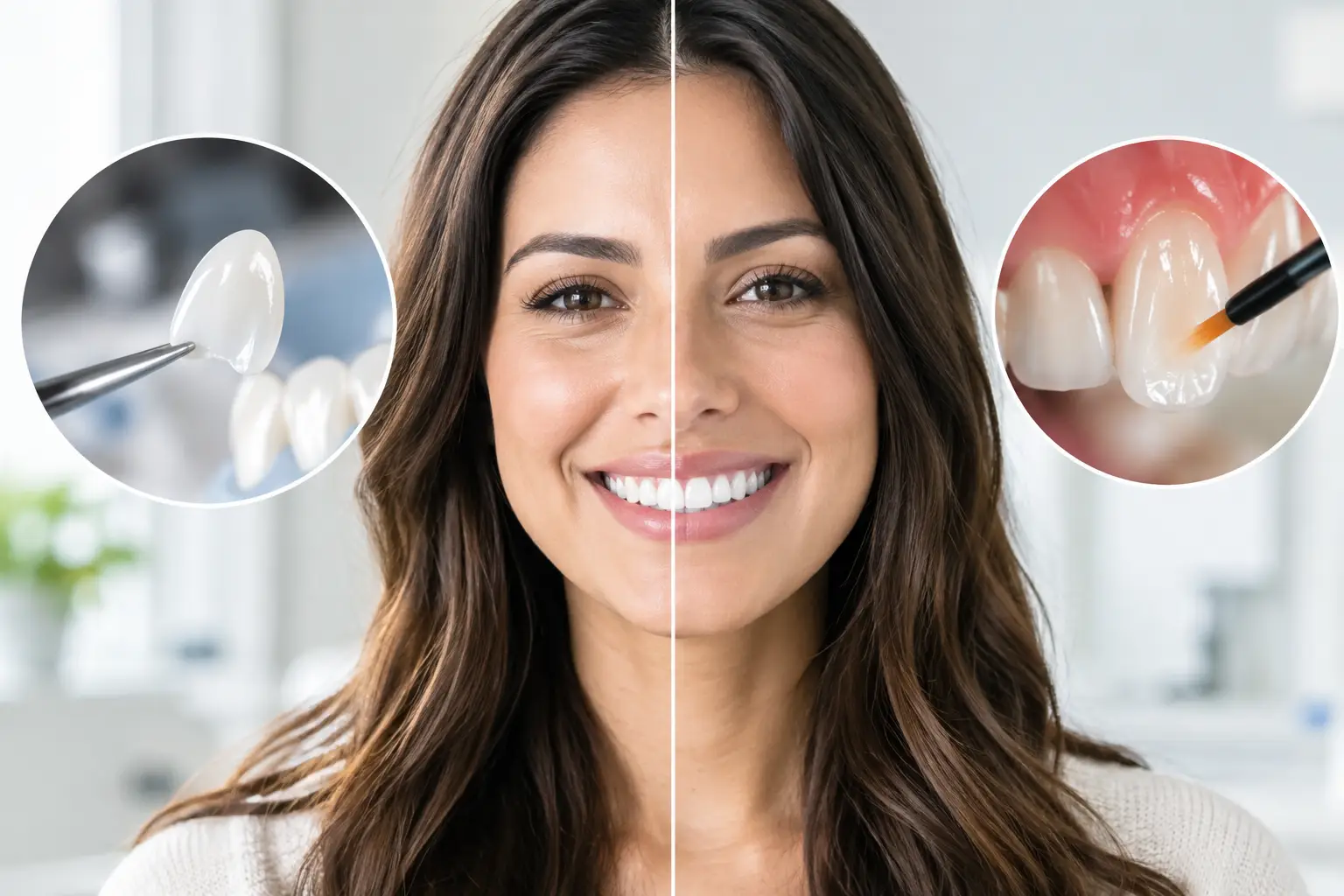
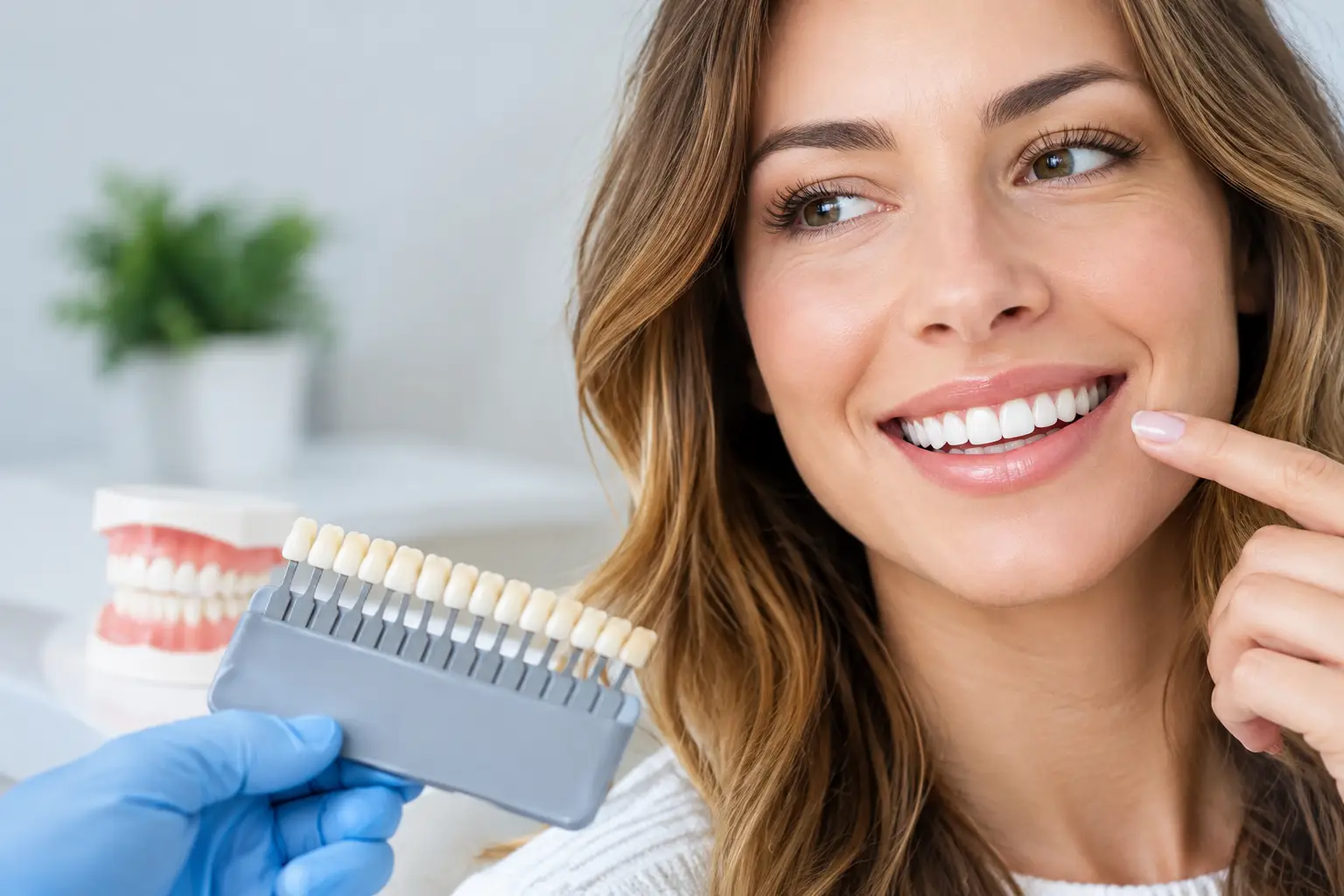
A crown can look bright when it is first fitted, then appear slightly darker years later as the natural teeth around it change colour. It is a common concern, particularly for patients considering professional whitening before an event, a new role or simply because their smile no longer feels like them. So, does teeth whitening work on crowns? No – whitening gel does not alter the shade of a dental crown. It can, however, brighten the natural teeth beside it, which is why a little planning makes such a difference.
Does teeth whitening work on crowns?
Dental crowns are made from restorative materials rather than natural tooth enamel. These may include porcelain, ceramic, zirconia, composite resin, or a porcelain layer bonded to metal. Professional whitening products work by breaking down colour compounds within natural enamel and dentine. Crown materials do not respond to that process in the same way.
This means a crown will remain its existing shade throughout whitening treatment. If your natural teeth become lighter, the crown may look comparatively darker or more yellow, even if it has not changed at all.
That does not mean whitening is unsuitable if you have crowns. It simply means your dentist should assess the position, age and visible shade of each restoration before treatment begins. A crown at the back of the mouth may not be noticeable after whitening. A crown on a front tooth, however, requires more careful aesthetic planning.
Why a crown may look darker over time
A crown itself does not absorb stain in the same way as enamel, especially when it has a smooth, well-maintained surface. Yet several things can make it appear less bright.
Natural teeth gradually pick up colour from everyday habits, including tea, coffee, red wine, smoking and strongly coloured foods. As they darken, an originally well-matched crown can sometimes look lighter than the surrounding teeth. After whitening, the opposite can happen: the natural teeth lighten while the crown stays put.
Surface staining can also collect around the edge of a crown or on a slightly roughened surface. This is particularly possible with older restorations, crowns with small areas of wear, or where plaque and calculus have built up. A professional hygiene appointment may improve the appearance by removing external deposits, but it will not lighten the underlying crown material.
Occasionally, what looks like a dark crown is actually a problem at the gumline. Recession can expose the root of the tooth or the edge of an older crown, while a dark line may be visible beneath some porcelain-fused-to-metal crowns. These situations need a clinical examination rather than a whitening product.
What happens if you whiten teeth around a crown?
The outcome depends largely on where the crown is and how much lighter you want your natural teeth to become. A modest improvement may leave a small difference that is barely visible, particularly if the crown is not in the smile line. A more significant whitening result can make the contrast obvious.
For example, if you have a crown on an upper front tooth and whiten the rest of your teeth by several shades, that crown may no longer blend naturally. It will not become damaged by professional whitening, but its colour will no longer match.
This is why dentists commonly recommend whitening natural teeth first when a new visible crown is being planned. Once the whitening result has stabilised, the new crown can be colour-matched to your brighter smile. It is usually wiser to choose the shade you would like to maintain long term rather than match a crown to teeth you may later decide to whiten.
Allow time for the shade to settle
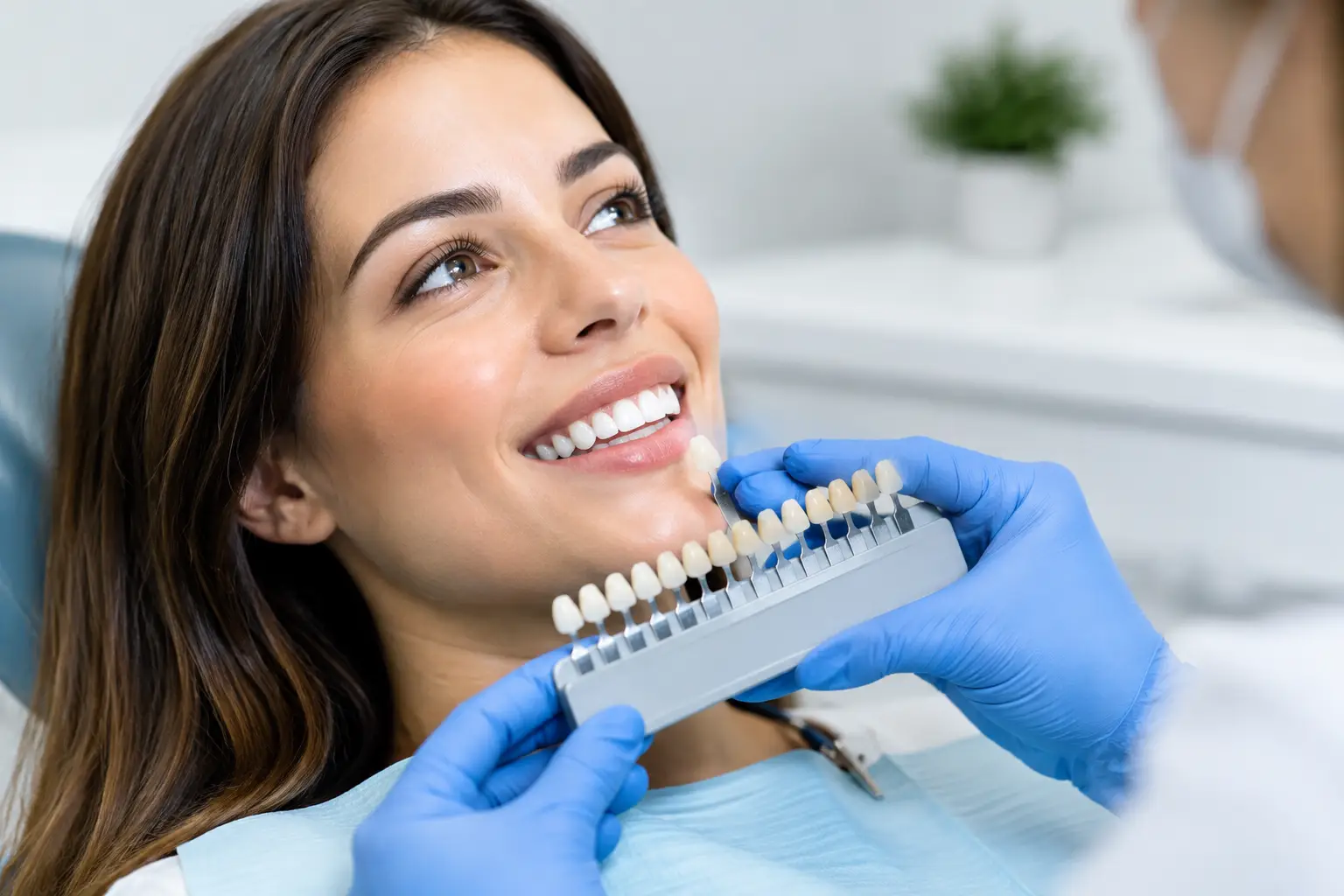
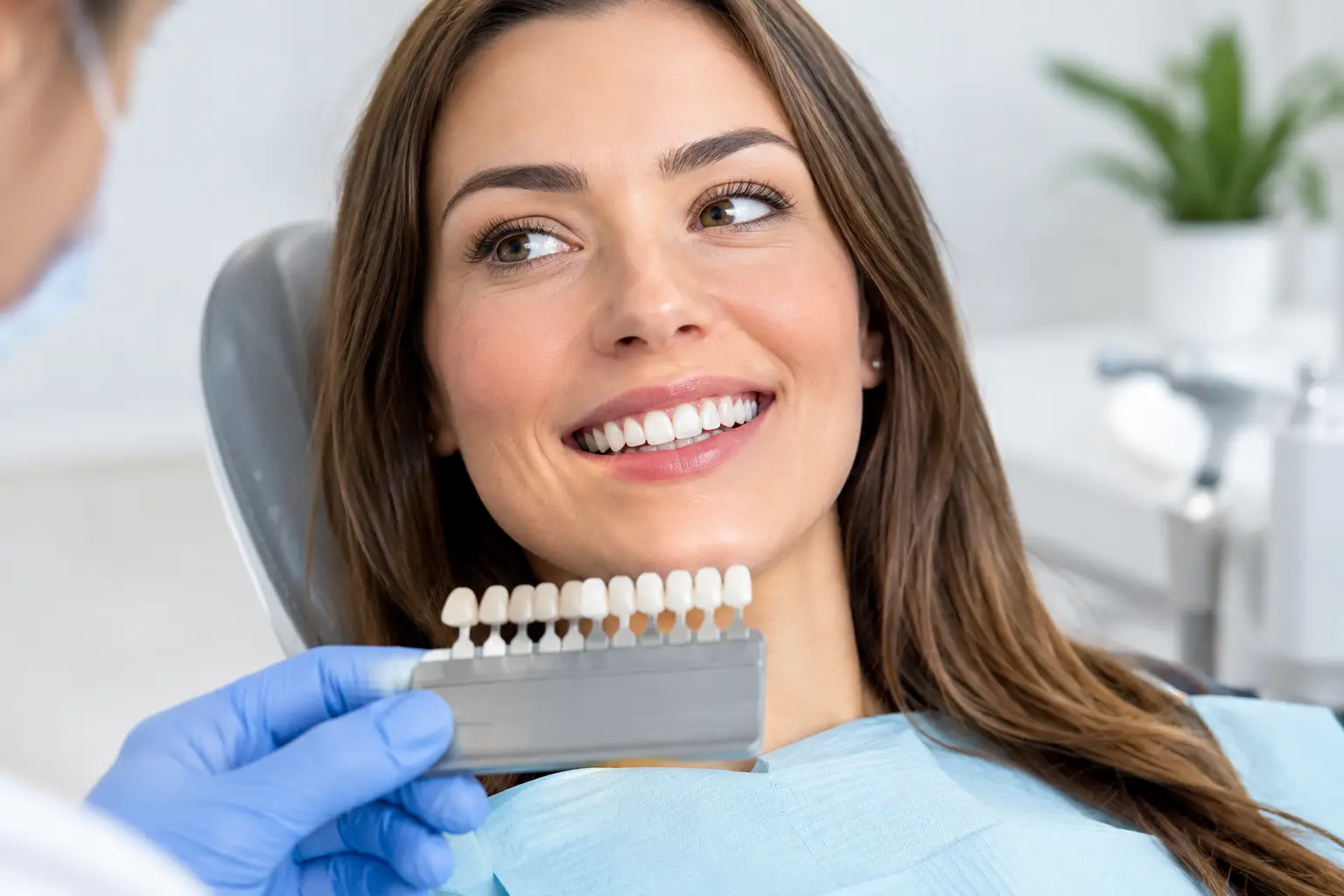
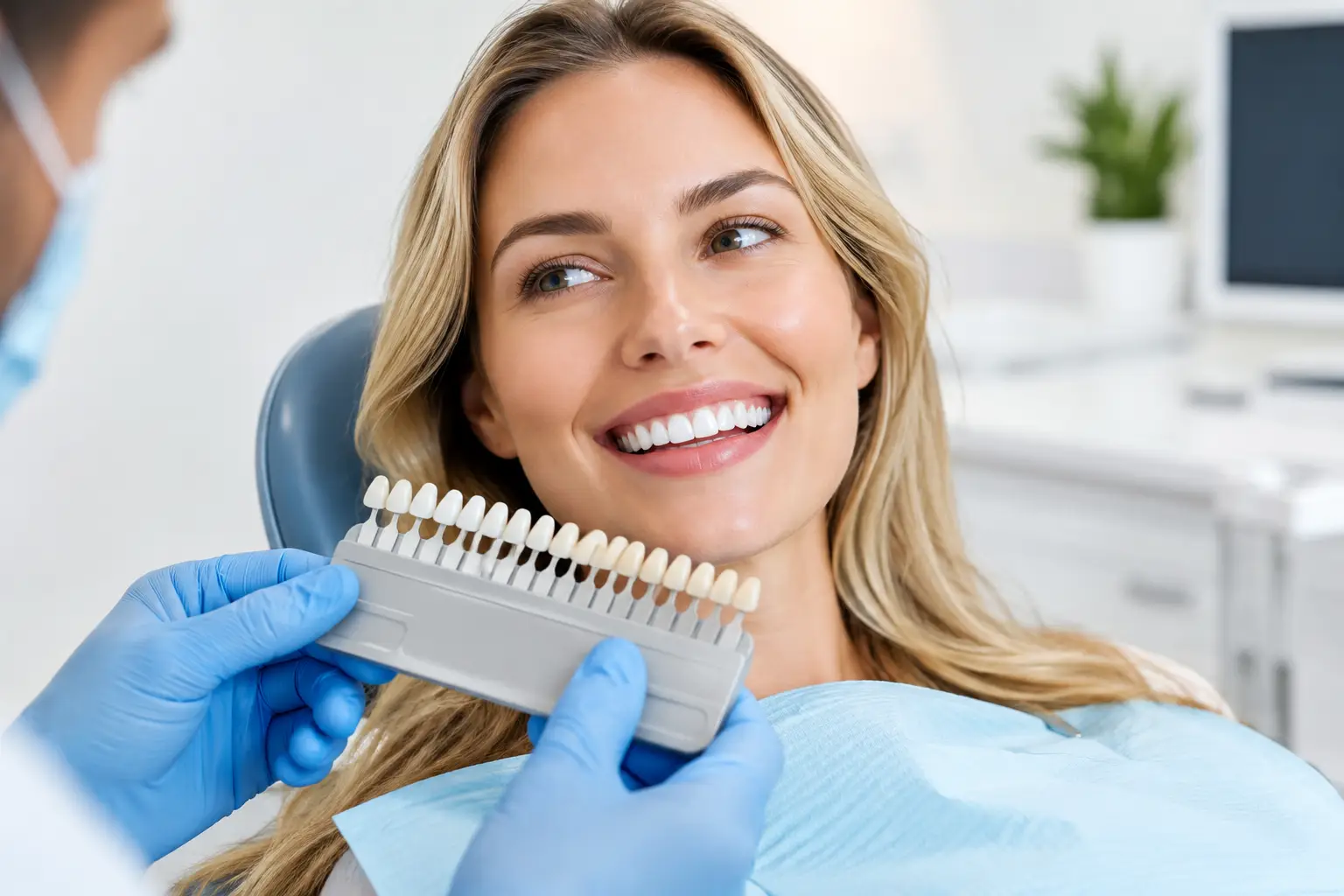
Teeth can look temporarily lighter immediately after whitening because they are slightly dehydrated. Your dentist will normally allow a settling period before selecting the shade for a new crown, veneer or composite bonding. This gives a more reliable match and reduces the chance of needing an early replacement for cosmetic reasons.
Can an existing crown be made whiter?
An existing crown cannot be whitened in the same way as natural teeth. There are, however, a few possibilities depending on why it looks darker.
If the issue is surface stain, a dentist or hygienist may be able to clean and polish the restoration. This can restore some brightness and lustre, particularly where tea, coffee or smoking stains have built up. It is a conservative first step, but it will not change the crown’s original shade.
If the crown no longer matches your whitened teeth, replacement may be the most predictable way to improve the colour. A new crown can be selected to complement your chosen tooth shade and the character of your neighbouring teeth. This is not always necessary, and it should not be done simply because a minor difference is visible only under close inspection. The decision depends on your expectations, the crown’s location and its overall condition.
Replacement may be more reasonable where a crown is already old, chipped, poorly fitting, repeatedly inflamed around the gum, or showing a visible dark margin. If it is healthy, comfortable and structurally sound, your dentist can discuss whether living with a slight shade variation is preferable to replacing it purely for aesthetic reasons.
What about implant crowns, veneers and bonding?
The same principle applies to implant crowns, porcelain veneers and composite bonding: whitening does not change their shade. Implant crowns are particularly relevant because they are designed to remain stable and natural-looking over many years. Whitening the teeth around an implant crown is often possible, but the crown itself will not respond.
Composite bonding can sometimes be polished or refreshed, depending on its condition. It may still need replacing if you want a noticeably lighter overall smile. Porcelain veneers are highly stain-resistant, but they cannot be whitened either.
For patients considering several treatments, the order matters. Whitening is often completed before final visible restorations are placed. This allows crowns, veneers or bonding to be designed around the preferred tooth colour, helping create a more balanced result.
Why over-the-counter whitening can create unwanted contrast
Shop-bought whitening products may seem like a straightforward answer, but they are less predictable than dentist-supervised treatment. They can lighten natural teeth unevenly, irritate gums if used incorrectly and make an existing crown stand out without giving you a controlled plan for the mismatch.
Whitening toothpastes deserve particular caution. They do not bleach crowns or natural teeth in the way professional whitening gels do. Some are more abrasive than others and may remove surface stain, but excessive use can wear enamel or roughen restorative surfaces over time. A rougher surface can actually attract stain more readily.
A professional assessment is valuable before any whitening treatment, especially if you have crowns in the front of your mouth, gum recession, sensitivity, decay, leaking restorations or untreated gum disease. Whitening should enhance a healthy smile, not distract from an issue that needs treatment first.
Planning whitening with crowns in place
The best approach starts with an honest conversation about what you would like to change. Your dentist will look at the shade, material and condition of your crown, how much of it shows when you smile, and whether your natural teeth are suitable for whitening.
If the crown is not highly visible, you may choose to whiten your natural teeth and leave it as it is. If it is prominent, you might whiten first and then replace the crown once your new shade has settled. Alternatively, if your current tooth colour is already even and you only want to remove superficial staining, a professional clean may be all that is needed.
At Russell Avenue Dental & Implant Centre in St Albans, treatment planning is tailored to the whole smile rather than one tooth in isolation. That is particularly helpful when whitening, crowns, bonding, veneers or implant restorations need to work together aesthetically.
A well-matched crown should look like part of your smile, not a separate dental treatment. Before reaching for a whitening kit, arrange an assessment and make a plan that protects both the health of your teeth and the confidence you want from your smile.