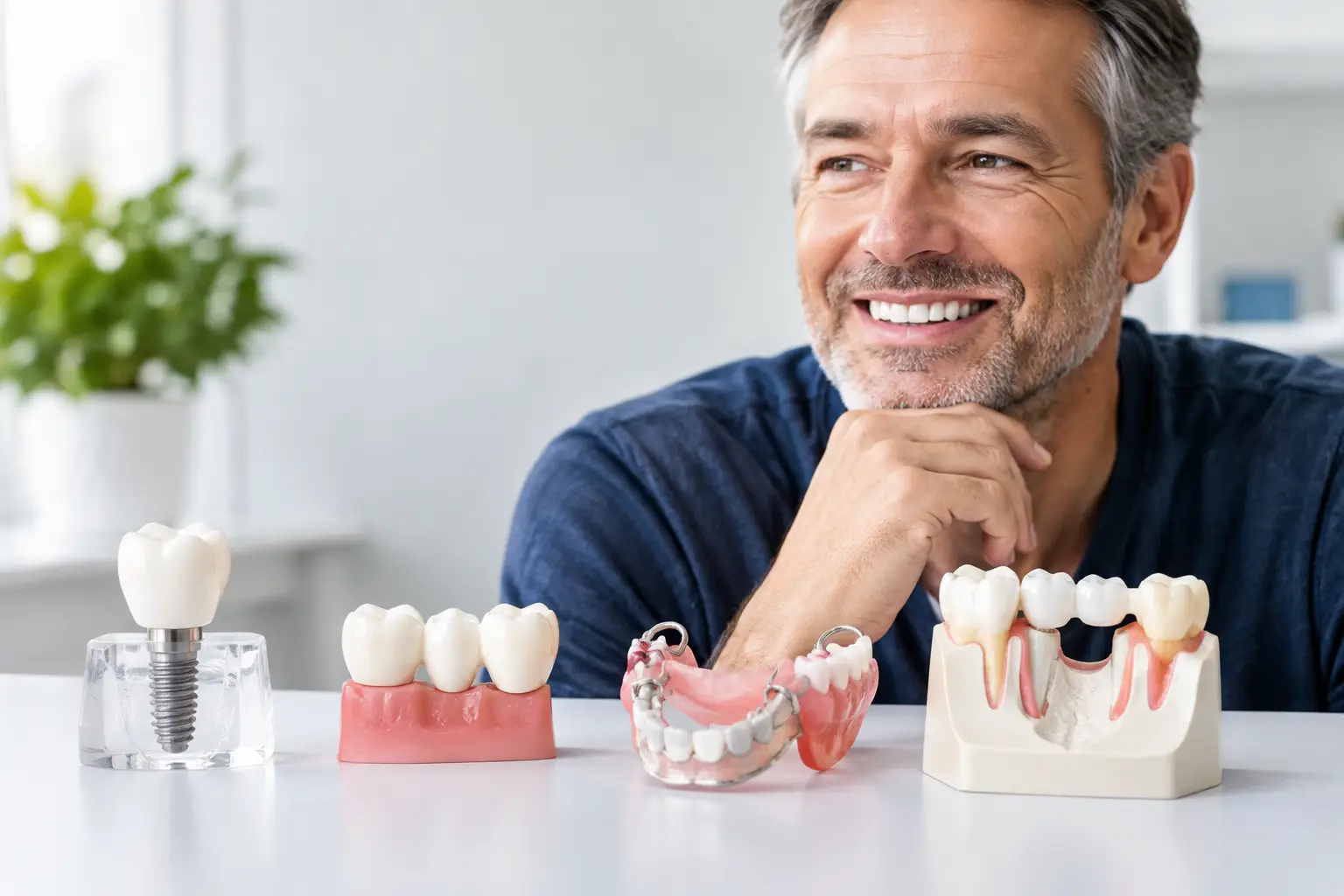
A missing molar may not be visible when you smile, but it can change far more than appearance. Back teeth do most of the heavy work when you chew, helping to distribute pressure across your bite. When one is lost, nearby teeth can drift, the opposing tooth may over-erupt and eating comfortably can become more difficult. For many patients, the best options replacing back teeth are dental implants, bridges or removable dentures – but the right choice depends on your mouth, health, priorities and long-term plans.
A consultation is the sensible place to start. Rather than choosing a treatment from a list, your dentist should assess the gap, the condition of neighbouring teeth, your bite, gum health and the amount of bone available. This creates a plan that protects the rest of your smile as well as restoring the missing tooth.
Why replacing a back tooth can be worthwhile
It is understandable to postpone treatment for a tooth at the back of the mouth, particularly when the gap is not immediately noticeable. Some people adapt well initially, chewing more on one side without giving it much thought. Over time, however, uneven chewing can place extra strain on the remaining teeth and jaw.
A space left by a missing tooth can also become harder to clean. Food may collect around the gap, while adjacent teeth can tip into it. If this movement affects your bite, it may complicate future restorative treatment. Replacing a back tooth is therefore usually about preserving function and stability, not simply filling a space.
There are situations where monitoring a missing back tooth may be appropriate, especially if it is a wisdom tooth with no practical role in the bite. For a missing premolar or molar, however, it is generally worth discussing replacement options before the position changes further.
Best options for replacing back teeth
Dental implants
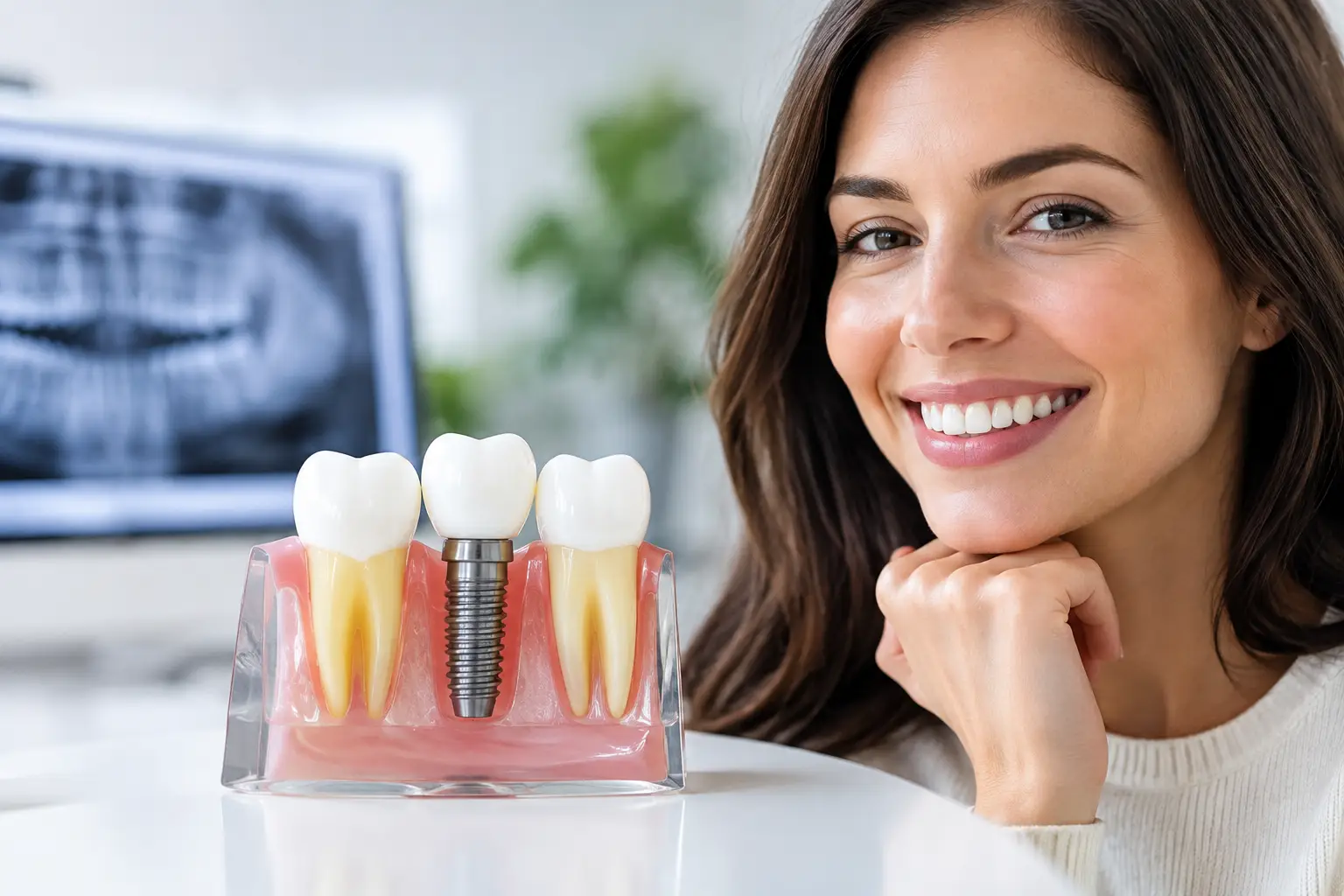
A dental implant replaces the root of a missing tooth with a small titanium post placed in the jawbone. Once it has integrated with the bone, a carefully made crown is attached above the gum. The result is a fixed replacement that looks and feels close to a natural tooth.
For a single missing molar, an implant is often considered the most conservative fixed option because it does not require the teeth on either side of the gap to be filed down. It can restore strong chewing function, help maintain the bone in the area and make everyday tasks such as eating, speaking and cleaning feel more natural.
Implants do require healthy gums, good oral hygiene and enough supporting bone. If bone has reduced after a tooth has been missing for some time, a bone graft may be recommended before or alongside implant treatment. Smoking, uncontrolled gum disease and certain medical conditions can also affect suitability and healing. These factors do not always rule treatment out, but they need careful consideration.
Treatment takes longer than other options because healing is part of the process. The time investment can be worthwhile for patients looking for a permanent-feeling, independent tooth replacement. With conscientious home care and regular professional maintenance, an implant restoration can offer an excellent long-term solution.
Dental bridges
A dental bridge replaces a missing tooth by securing a replacement tooth to the teeth beside the gap. A conventional bridge is fixed to crowns placed over the neighbouring teeth, while other bridge designs may be suitable in more limited circumstances.
A bridge can be a good choice when the teeth next to the space already need crowns due to large fillings, cracks or existing restorations. In this situation, preparing those teeth may form part of an overall restorative plan rather than compromising healthy enamel unnecessarily. Bridges are fixed in place, so there is no need to remove them for cleaning.
The main trade-off is that a conventional bridge relies on adjacent teeth for support. Those teeth must be prepared, and cleaning underneath the replacement tooth requires specific techniques such as floss threaders or interdental brushes. A bridge does not replace the tooth root, so it will not preserve bone in the gap in the same way as an implant.
For patients who want a fixed result but are not suitable for implant treatment, or who prefer a shorter treatment timeline, a well-designed bridge can be an attractive and reliable option.
Removable partial dentures
A partial denture is a removable appliance that carries one or more replacement teeth. Modern designs can be far more discreet and comfortable than many people expect, especially when they are carefully planned and fitted. They can be made from acrylic, metal or flexible materials, depending on the clinical situation.
Dentures are often useful when several teeth are missing, when a patient needs an economical way to restore function, or when surgery is not advisable. They can also serve as an interim solution while the mouth heals after an extraction or while implant treatment is being planned.
That said, removable dentures are not fixed. Some patients find they need time to adapt to the feeling of an appliance, and they may move slightly during eating. They should be removed for cleaning, and their fit may change as the gums and jawbone change over time. For a single back tooth, many patients prefer the stability of an implant or bridge where appropriate.
Implant-supported bridges and dentures
When several back teeth are missing, it may not be necessary to place one implant for every tooth. Two or more implants can sometimes support a bridge to replace a row of teeth. For patients with more extensive tooth loss, implants may also be used to secure a denture, greatly reducing movement.
This approach can provide a strong balance between stability and efficiency. It requires detailed assessment, including scans where needed, to establish whether the bone and bite can support the proposed restoration. The number and position of implants are chosen for predictable support, not simply to fill every gap.
How to decide which treatment suits you
The best option is rarely determined by one factor alone. Your dentist will consider whether the neighbouring teeth are healthy, whether there is enough bone for an implant, how you bite together and whether you grind or clench your teeth. The location of the gap matters too: a missing lower molar presents different practical demands from a missing upper premolar.
Your expectations are equally relevant. If you value a fixed, natural-feeling replacement and are comfortable with a longer treatment journey, an implant may be the preferred route. If adjacent teeth already need restoration, a bridge may make excellent clinical sense. If you need to replace multiple teeth or are looking for a removable option, a partial denture may be more suitable.
Cost is naturally part of the conversation, but it should be considered alongside longevity, maintenance and the effect on surrounding teeth. A lower initial cost does not always mean the lowest cost over time if future replacement or additional treatment becomes necessary. A personalised treatment plan should set out the stages, expected fees and maintenance requirements clearly.
Looking after a replacement back tooth
Every replacement option needs daily care. Implant crowns and bridges cannot decay themselves, but the gums and supporting teeth around them can still develop disease. Brushing twice daily with fluoride toothpaste, cleaning between teeth and attending regular examinations and hygiene appointments help protect the investment you have made.
If you have a bridge or implant, your dentist or hygienist can show you the most effective brushes and cleaning aids for the shape of your restoration. For dentures, regular cleaning and proper storage are essential, along with reviews to check fit and oral tissues.
At Russell Avenue Dental & Implant Centre in St Albans, treatment planning for missing teeth begins with understanding how you want your mouth to feel and function, not just how the gap appears. A careful assessment can clarify whether an implant, bridge or denture is right for you and give you confidence in the next step.
If a missing back tooth is affecting how you eat, speak or feel about your smile, arranging a consultation sooner rather than later can preserve more options and make the path to a comfortable, stable bite clearer.