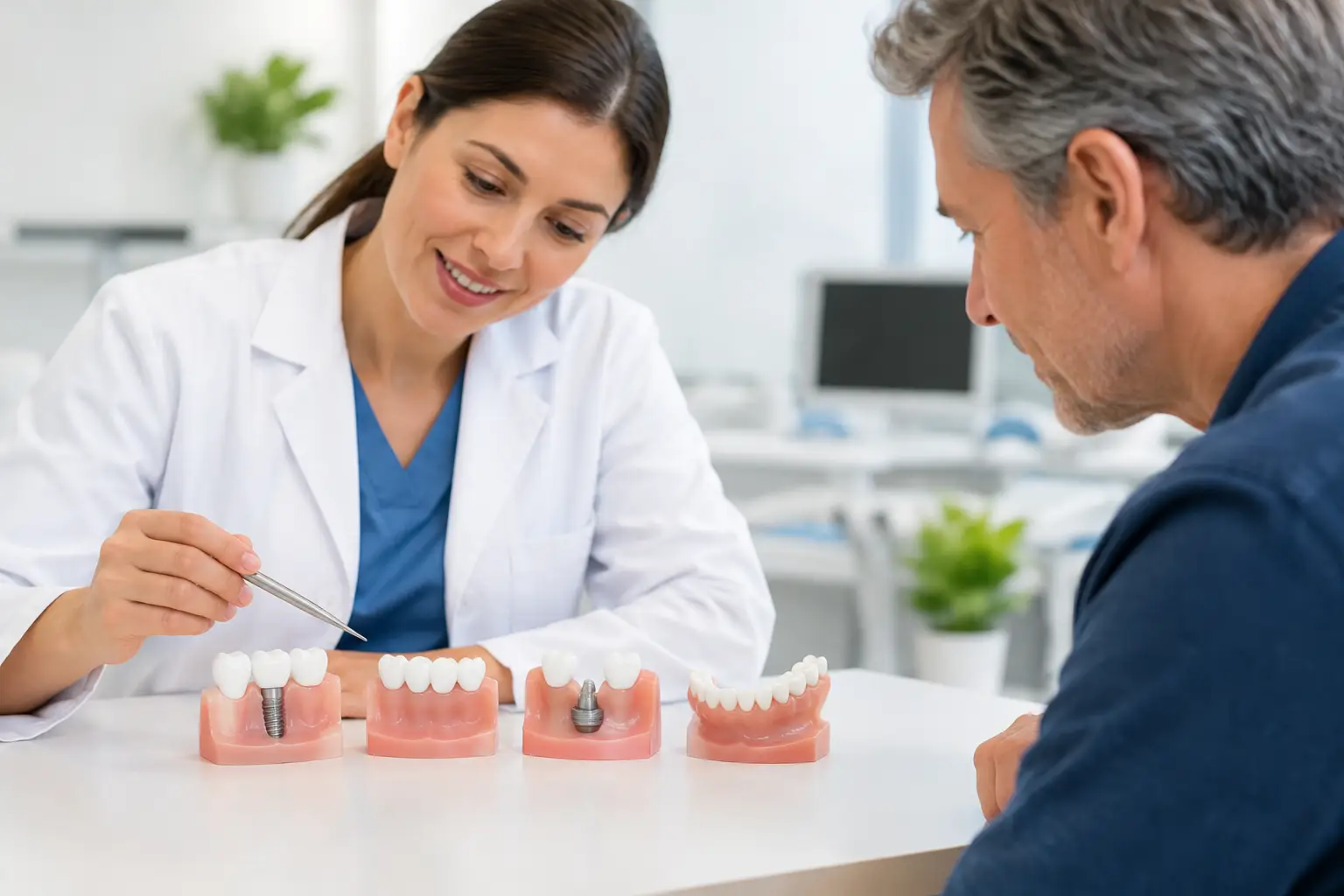
A dental implant may be placed beneath the gum, but the crown is the part you see every day when you smile, speak and eat. Understanding how implant crowns are attached can make the treatment feel far more straightforward, particularly when you are deciding between options for replacing a missing tooth.
The short answer is that an implant crown is secured to the implant itself, usually through a small connecting component called an abutment. Your dentist will select the most suitable method based on the position of the tooth, the available space, your bite and the desired appearance. The aim is always the same: a stable, natural-looking replacement tooth that feels comfortable and can be maintained properly.
How implant crowns are attached
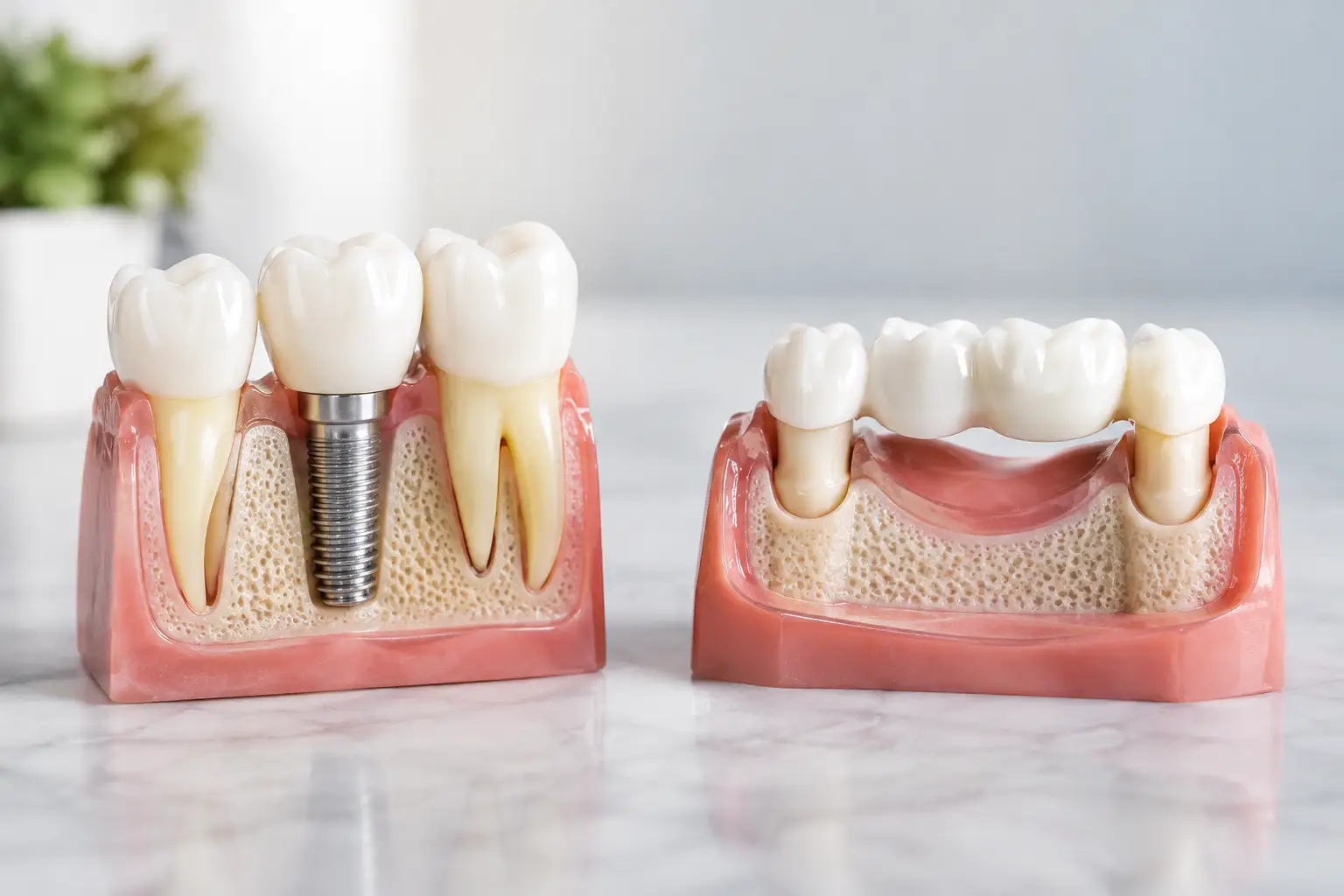
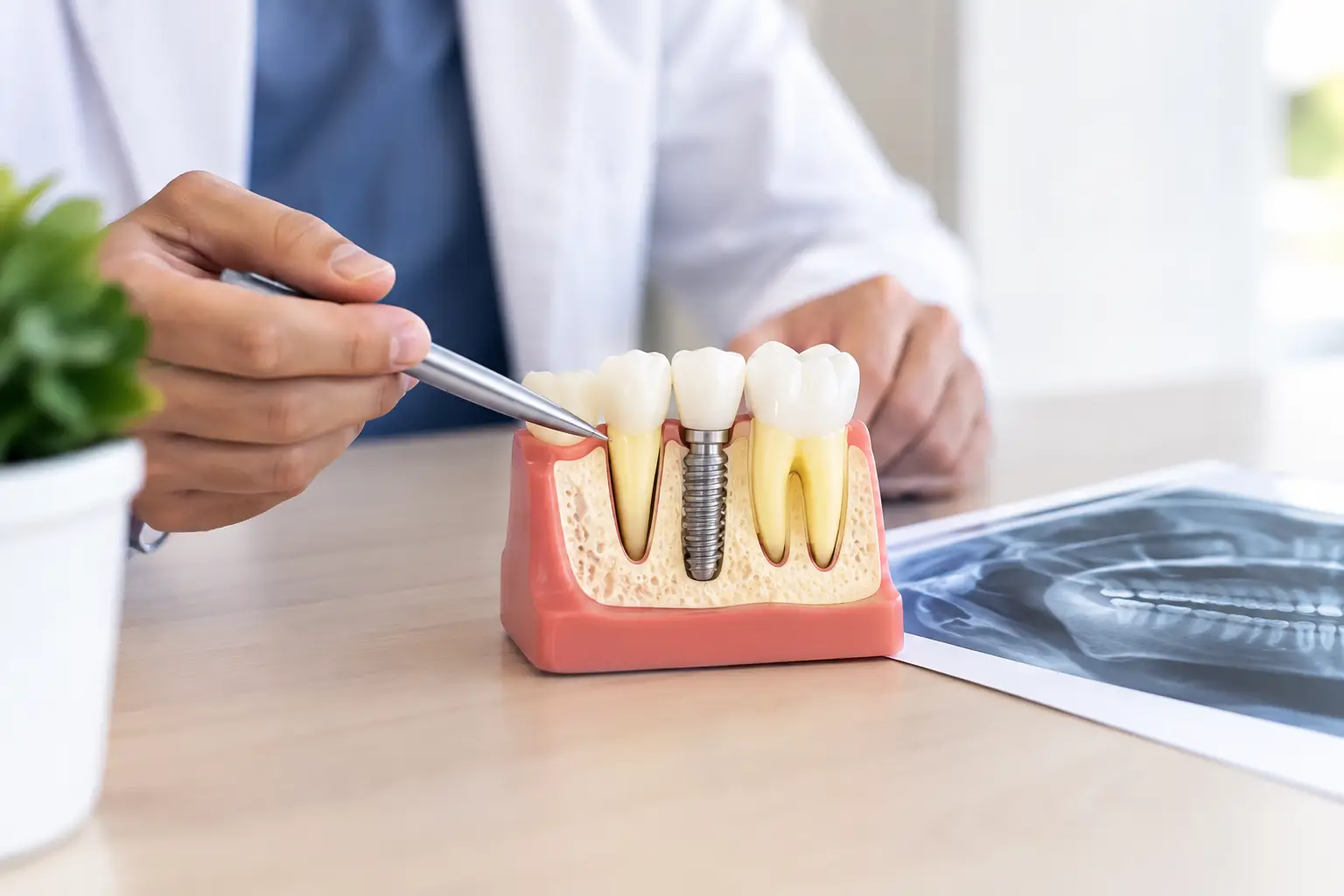
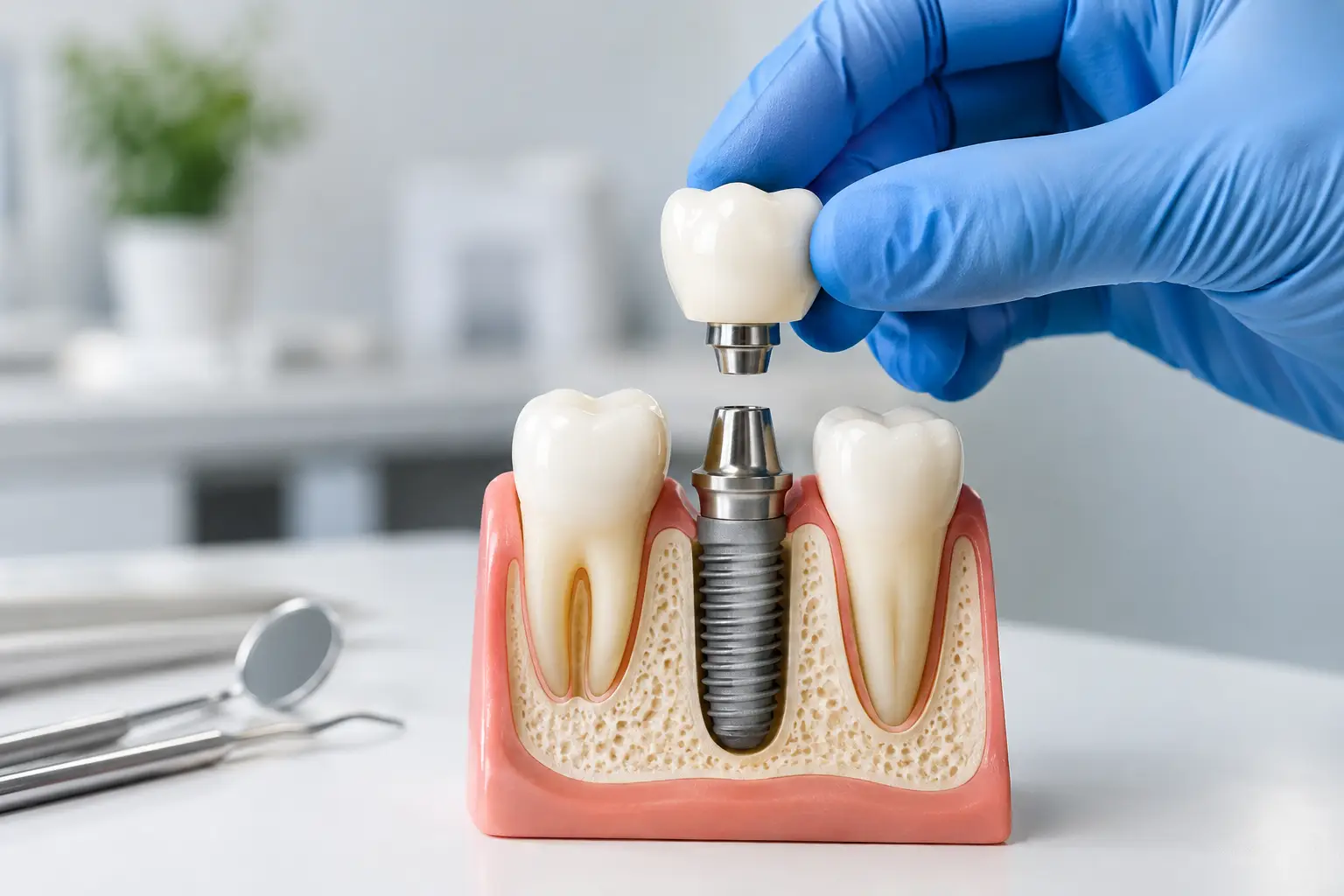
A complete implant restoration has three main parts. The implant is a small titanium fixture placed in the jawbone to take the role of a tooth root. The abutment connects that implant to the visible tooth. Finally, the crown is the custom-made restoration that recreates the shape and colour of the missing tooth.
Once the implant has integrated with the bone and the surrounding tissues are healthy, the dentist takes precise records of your mouth. These may include digital scans, photographs and bite measurements. A dental technician then creates a crown designed to sit naturally alongside your neighbouring teeth.
The crown is normally attached in one of two ways: it can be screw-retained or cement-retained. In some situations, the crown and abutment are made as one piece and attached directly to the implant with a screw. This is particularly common where access and angles allow it.
Screw-retained implant crowns
With a screw-retained crown, a tiny screw passes through the crown or abutment and fixes the restoration to the implant. The screw access channel is then covered with a tooth-coloured filling material, so it is usually discreet when the crown is in place.
One significant benefit is retrievability. If the crown needs to be removed in future for cleaning, repair or assessment, the dentist can usually access the screw and lift the crown away without damaging it. This can be valuable over the lifetime of the restoration, as implants still need professional review and maintenance.
The position of the access channel matters. On a back tooth, it may emerge on the biting surface, where it is rarely noticeable. For a front tooth, the ideal emergence point is usually on the back surface. If the angle would place it visibly on the front of the crown, a screw-retained option may not provide the best aesthetic result.
Cement-retained implant crowns
A cement-retained crown is fitted over an abutment and secured using dental cement. This approach can offer an uninterrupted outer surface, which may be helpful in certain aesthetic areas or where the implant angle makes a screw channel less suitable.
However, cement-retained crowns require particular care when they are fitted. Any excess cement beneath the gumline must be removed thoroughly, because retained cement can irritate the tissues around an implant. A well-planned restoration should also be designed so that the crown can be removed if necessary, although this can be more involved than with a screw-retained crown.
Neither method is automatically superior. A screw-retained crown may be preferred for ease of future maintenance, while a cement-retained crown can sometimes better meet the cosmetic or technical needs of a particular case. The most appropriate choice depends on your individual anatomy and treatment plan.
Is the crown fitted as soon as the implant is placed?
Not always. After an implant is placed, it commonly needs a healing period to integrate with the jawbone. This process, known as osseointegration, creates the firm foundation that allows the implant to support everyday biting forces.
In some carefully selected cases, a temporary tooth can be fitted soon after implant placement. This is often called immediate loading or immediate temporisation. It can be especially useful for a visible front tooth, but it is not appropriate for everyone. The implant must be stable at placement, the bite must be carefully controlled and there must be favourable bone and gum conditions.
More commonly, the implant is left to heal before the final crown is made. During this time, you may have a temporary solution to preserve appearance and space. The final crown is only fitted when the implant, gum contours and bite are ready for it. Taking that time can help create a more predictable and natural-looking result.
What makes an implant crown feel natural?
Attachment is only one part of the result. A high-quality implant crown needs to be shaped and positioned carefully so that it supports your smile and works comfortably with your bite.
Unlike a natural tooth, an implant does not have the same periodontal ligament around its root. This means it does not have quite the same cushioning or sensory feedback when you bite. For that reason, the crown must be adjusted with precision. A crown that is too high or takes too much biting pressure may place unnecessary force on the implant and surrounding bone.
The visible details also matter. The dentist considers the shade, translucency, surface texture and proportions of the neighbouring teeth. Gum shape is equally important, especially at the front of the mouth. Sometimes further soft-tissue shaping, a provisional crown or additional planning is needed to achieve the most harmonious appearance.
Can an implant crown be replaced later?
Yes. The crown is a separate component from the implant, which means it can often be repaired or replaced without replacing the implant itself. Crowns can eventually show wear, chip, loosen or cease to match surrounding teeth if your natural teeth change colour over time.
This does not mean a crown will need frequent replacement. With good planning, careful fitting and regular maintenance, implant crowns can serve patients well for many years. However, it is sensible to view an implant restoration as something that should be reviewed throughout its life, rather than fitted and forgotten.
If a crown feels loose, your bite suddenly feels different, or you notice swelling, bleeding or discomfort around the implant, arrange an appointment promptly. These signs do not always indicate a serious problem, but early assessment gives the best opportunity to address any issue simply.
Looking after a crown attached to an implant
An implant cannot develop decay in the same way as a natural tooth, but the gums and bone around it can still become inflamed. Thorough daily cleaning is essential. Your dentist or hygienist may recommend a soft toothbrush, interdental brushes of the correct size, implant floss or other cleaning aids according to the design and position of your restoration.
Regular professional hygiene visits and implant reviews are equally valuable. They allow the team to check the gums, bite, crown and implant components before minor concerns become more difficult to manage. If you clench or grind your teeth, a protective night guard may also be recommended to reduce excessive forces on the crown.
At Russell Avenue Dental & Implant Centre in St Albans, implant treatment is planned around the whole result: a secure foundation, healthy gums, a balanced bite and a crown that complements your smile. A consultation is the right place to discuss how the crown would be attached in your case, as well as the timing, appearance and maintenance involved.
A well-made implant crown should not draw attention to the way it is fixed. It should simply let you eat, speak and smile with the reassurance that your replacement tooth has been planned for both function and confidence.