A small chip on a front tooth can feel far more noticeable than it appears to anyone else. The same is true of uneven edges, small gaps or teeth that look darker than you would like. When comparing veneers versus composite bonding, the right choice is not simply about achieving a whiter or more even smile. It is about choosing a treatment that respects your natural teeth, suits your bite and delivers an appearance you feel comfortable with.
Both treatments can make a meaningful difference to smile confidence. However, they use different materials, involve different levels of tooth preparation and have different long-term care requirements. A personalised examination is the best way to decide which option will give you a natural, healthy-looking result.
Veneers versus composite bonding: the key difference
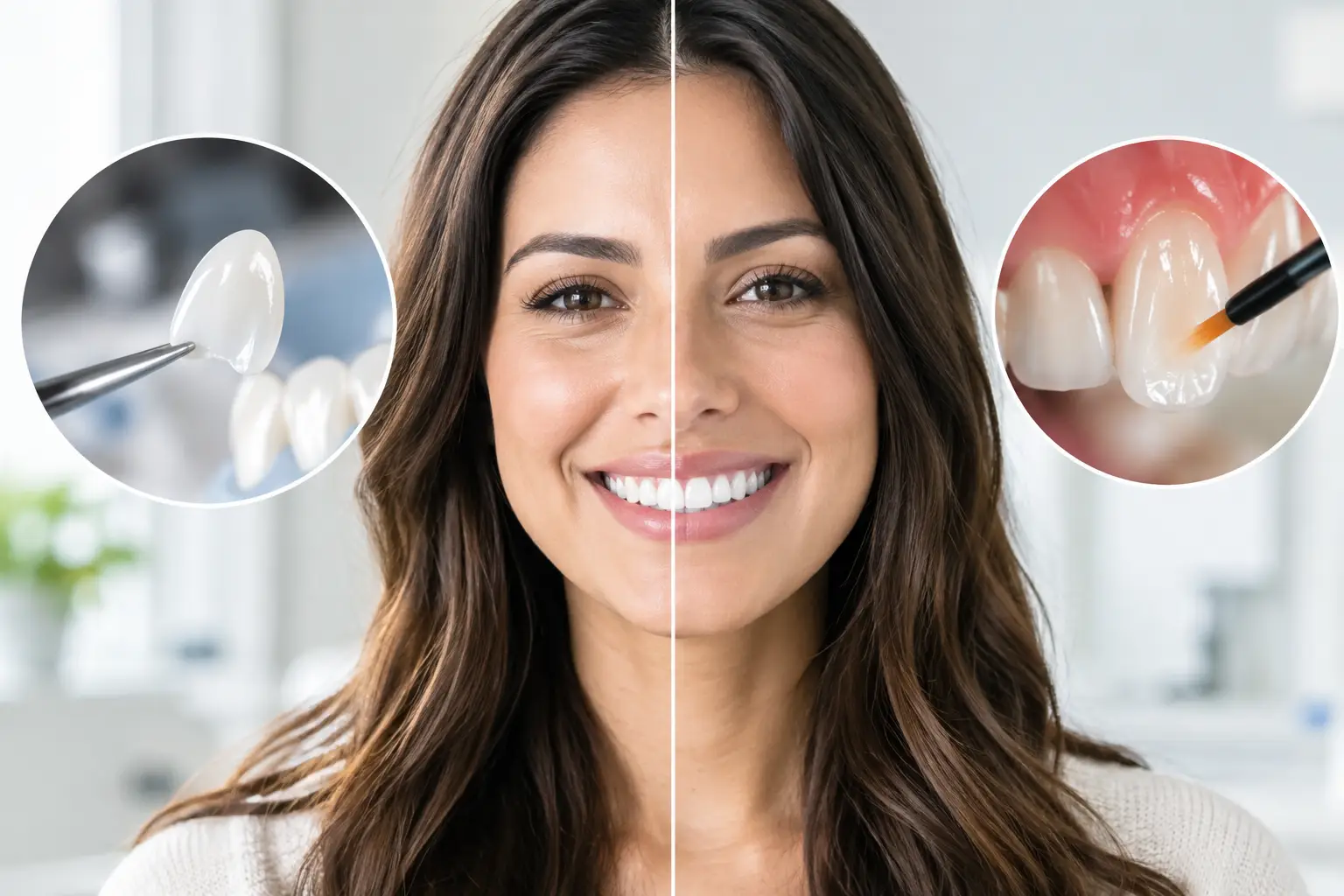
Composite bonding uses a tooth-coloured resin that is applied directly to the tooth, shaped by the dentist and hardened with a curing light. It can be used to rebuild chipped corners, close small gaps, soften uneven edges or improve the appearance of mildly misshapen teeth. The material is carefully colour-matched to blend with your smile.
Porcelain veneers are fine, custom-made shells that cover the front surface of a tooth. They are designed in a dental laboratory and bonded into place once the tooth has been prepared. Veneers can alter the colour, shape, length and apparent alignment of teeth, making them a strong option where a more comprehensive aesthetic change is desired.
Neither treatment is automatically better. Composite bonding is often a conservative way to make subtle improvements, while veneers may offer greater control over the final colour and shape, particularly where several front teeth are being treated.
How much of the natural tooth is changed?
This is often the deciding factor for patients considering cosmetic dentistry. Composite bonding usually requires little or no removal of healthy tooth enamel. In some cases, the tooth surface is lightly prepared to help the composite sit naturally and bond securely, but the treatment is generally considered minimally invasive.
Veneers commonly require a small amount of enamel to be reshaped so that the finished tooth does not look bulky. The amount varies depending on the position of the tooth, the desired change and the type of veneer being used. Once enamel has been removed, the tooth will generally need to remain restored with a veneer or another suitable covering in future.
For patients who value preserving as much natural tooth structure as possible, bonding may be particularly appealing. That said, minimal preparation veneers may be appropriate in selected cases. A dentist should assess whether there is sufficient space to create a natural-looking result without compromising the bite.
Appearance, colour and realism
High-quality composite bonding can look very natural, especially when improving one or two teeth. A skilled dentist can build subtle translucency and contour into the material, so it reflects light more like natural enamel. It is an excellent choice for small corrections where preserving the existing character of the smile matters.
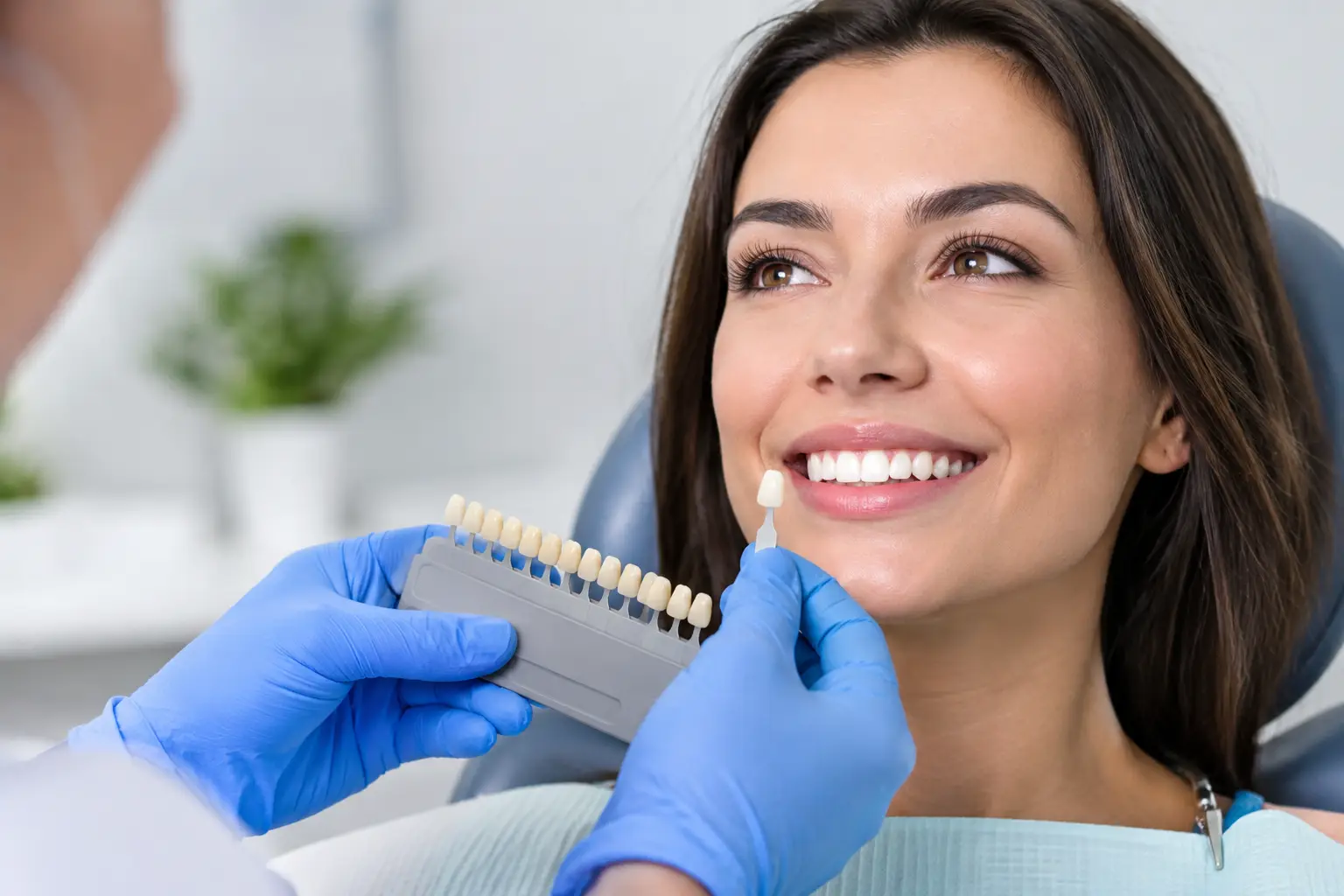
Porcelain has a glass-like quality that closely resembles enamel and tends to retain its polish over time. It is highly resistant to staining from tea, coffee, red wine and other coloured foods and drinks. For patients seeking a consistently bright smile across multiple teeth, veneers can offer excellent colour stability.
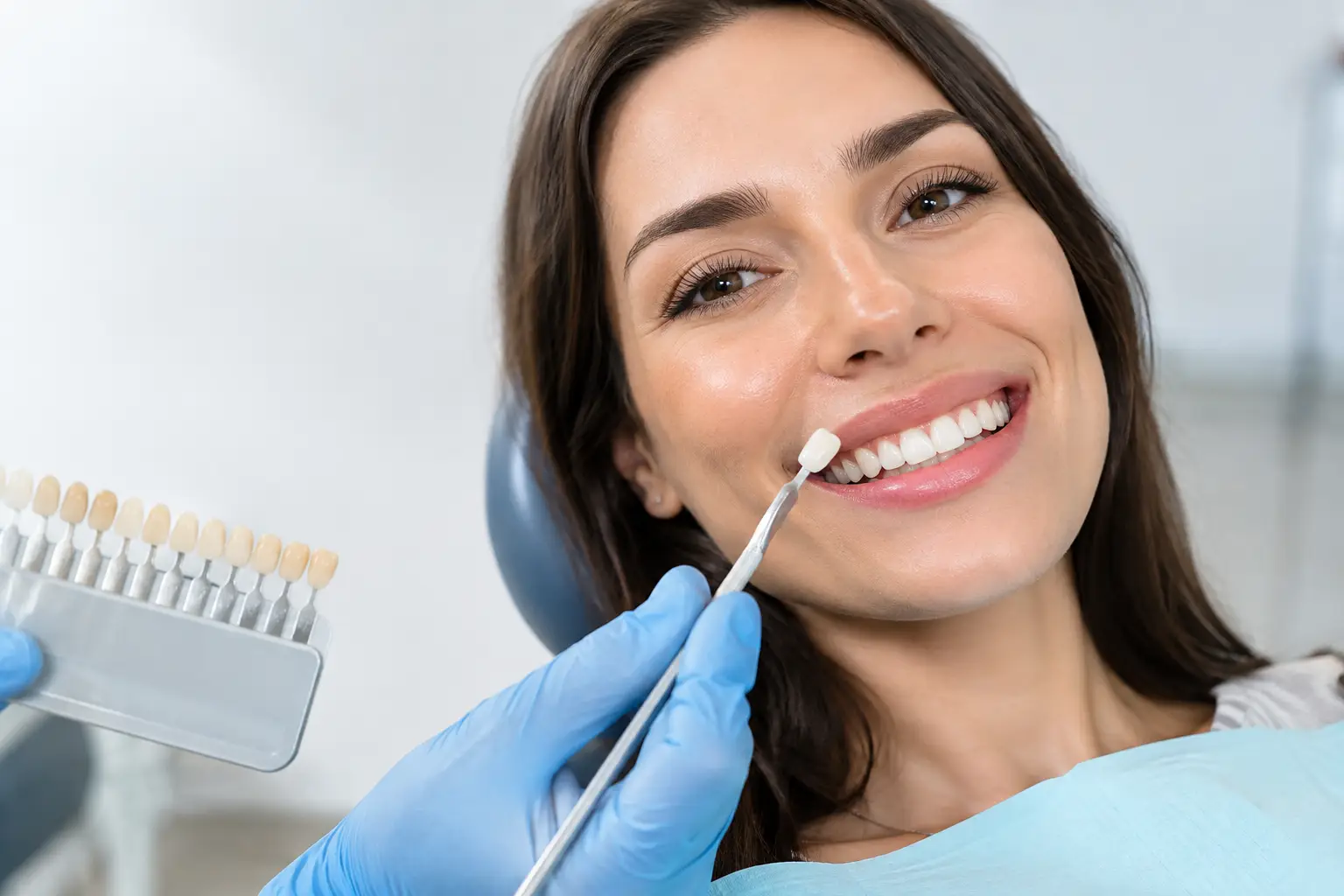
It is worth being realistic about shade. Whether you choose bonding or veneers, the new material will not respond to tooth whitening in the same way as natural enamel. If you are planning to whiten your teeth, this is usually best completed before the final shade of bonding or veneers is selected. This helps create a more harmonious result and avoids replacing restorations sooner than necessary.
Durability and everyday maintenance
Porcelain veneers are generally more resistant to staining and surface wear than composite resin. With good oral hygiene, regular dental care and a suitable bite, they can remain attractive for many years. They are not indestructible, however. Veneers can chip, crack or become loose, particularly if teeth are used to bite hard objects or if there is significant grinding or clenching.
Composite bonding is durable enough for normal daily use, but it is softer than porcelain. Over time, it can pick up surface staining, lose some of its polish or chip at the edges. One advantage is that small areas of damage can often be repaired directly, without replacing the entire restoration.
Whichever treatment you choose, brushing twice daily with fluoride toothpaste, cleaning between the teeth and attending routine examinations and hygiene appointments will protect both your oral health and cosmetic work. If you grind your teeth at night, a custom-made protective appliance may be recommended.
When composite bonding may be the better choice
Composite bonding is often well suited to patients with minor chips, worn edges, small spaces between teeth or slight differences in tooth shape. It can also be useful after orthodontic treatment, where a tooth needs a small adjustment to create a more balanced smile.
It may be the preferred option when a patient wants a conservative treatment, a more modest change or the ability to repair and adjust the result over time. It can be completed efficiently in suitable cases, although the time required depends on how many teeth are involved and the level of detail needed.
Bonding is not always ideal for heavily stained teeth, larger changes in tooth position or situations where a substantial amount of material would be needed. Adding too much composite can make teeth appear bulky and may place the material under greater pressure when biting.
When porcelain veneers may be the better choice
Veneers can be particularly effective where several visible teeth have deep discolouration, uneven proportions, old restorations or more significant aesthetic concerns. They allow detailed planning of shape, symmetry and shade, which can be valuable for patients looking for a more complete smile transformation.
They may also be appropriate when composite bonding would be likely to stain, wear or require frequent repairs. For example, a patient with extensive edge wear or existing large composite restorations may benefit from the strength and surface quality of porcelain, provided their bite and oral health are suitable.
Veneers are not a shortcut around underlying dental problems. Decay, gum disease, active tooth wear and unstable bite issues should be addressed first. If teeth are significantly crowded or protruding, orthodontic treatment may sometimes create a healthier and more conservative foundation than trying to mask the position with veneers.
Cost is only one part of the decision
Composite bonding often has a lower initial cost than porcelain veneers, partly because it does not require laboratory-made restorations. However, it may need polishing, repair or replacement sooner, depending on the material, your diet, oral hygiene and how your teeth meet together.
Veneers usually involve a greater initial investment but may provide longer-lasting colour and surface quality. The most useful comparison is not simply the fee for each treatment, but the likely maintenance over time and whether the treatment meets your aims without unnecessary alteration to healthy teeth.
A consultation should include a discussion of what you would like to change, an assessment of your teeth and gums, and a clear explanation of the limitations as well as the benefits. Photographs, smile planning and, where appropriate, a preview of possible changes can help you make a decision with confidence.
Choosing a treatment that still feels like you
The best cosmetic dentistry should not look artificial or distract from the rest of your face. At Russell Avenue Dental & Implant Centre, treatment planning begins with understanding your concerns, your expectations and the health of your smile. A natural result may mean refining one chipped tooth, while for another patient it may involve carefully planned veneers across several teeth.
If you are deciding between veneers and composite bonding, bring examples of smiles you like to your consultation, but also be open about what concerns you. A calm, detailed discussion can help you choose an option that protects your teeth and gives you a smile you are happy to show every day.