A crown has to do more than cover a damaged tooth. It must cope with biting forces, sit comfortably against the gum and look at home in your smile. When considering zirconia versus porcelain crowns, the right choice is rarely about which material is universally better. It is about the tooth being restored, where it sits in the mouth and what you need from the result.
For a back tooth that takes heavy pressure, strength may lead the decision. For a visible front tooth, subtle translucency and colour matching may matter most. A careful examination allows these priorities to be balanced rather than guessed.
What does a dental crown do?
A dental crown is a custom-made restoration that covers the visible part of a tooth. It may be recommended where a tooth has been weakened by a large filling, fracture, decay or root canal treatment, or where its shape, colour or function needs restoring.
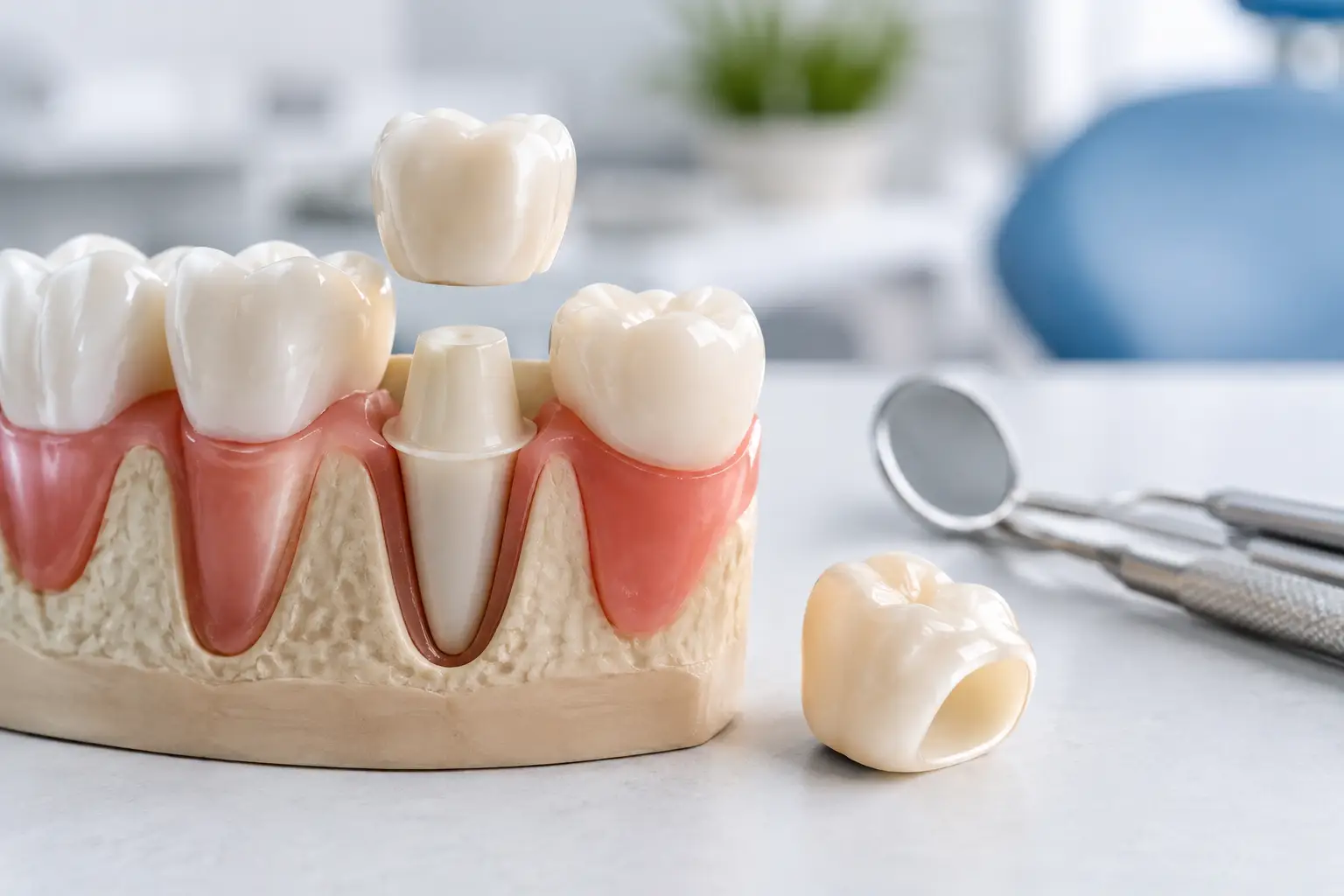
Crowns are also used to complete many implant treatments. In this setting, the crown replaces the visible tooth while the implant acts as the artificial root beneath the gum. Whether fitted to a natural tooth or an implant, the material needs to be chosen with both long-term function and appearance in mind.
Zirconia versus porcelain crowns: the key differences
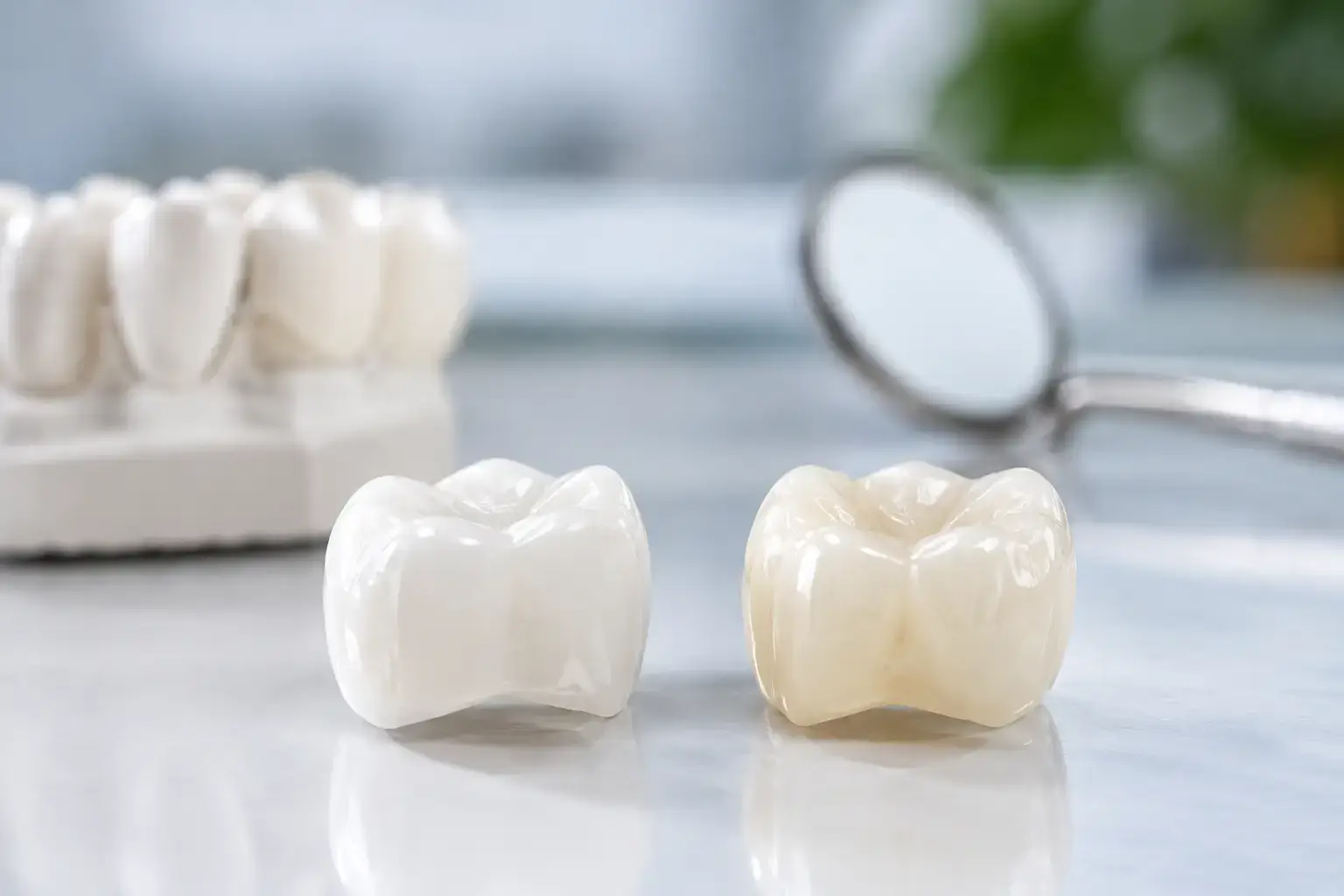
Zirconia and porcelain are both ceramic materials, but they behave differently. Zirconia is known for its exceptional strength. Porcelain is valued for the natural way it reflects and transmits light. Modern crown design can also combine the advantages of both, which is why the discussion is more nuanced than a simple either-or choice.
Zirconia crowns
Zirconia is a high-strength ceramic that is particularly useful in areas exposed to substantial biting forces. It is often considered for molars, bridges and implant crowns, especially for patients who clench or grind their teeth.
A monolithic zirconia crown is made from a single block of zirconia. This makes it highly resistant to chipping because there is no outer porcelain layer to break away. Earlier zirconia could sometimes look rather opaque, but newer multilayer and more translucent options have improved its aesthetic potential considerably.
Its main advantage is durability. In the right situation, zirconia can provide a stable, hard-wearing restoration with a good level of tooth-coloured appearance. It is also metal-free, which appeals to patients seeking an all-ceramic solution.
There are trade-offs. Although modern zirconia can look very convincing, it may not reproduce the delicate translucency of a natural front tooth as precisely as a carefully made porcelain restoration. Its hardness also means the opposing teeth and your bite must be assessed carefully. A well-designed, well-polished zirconia crown should be kind to the opposing enamel, but material choice alone does not guarantee this – the crown’s shape, surface finish and bite adjustment are equally important.
Porcelain crowns
The term porcelain crown can describe several restorations. It may refer to an all-ceramic crown, a glass ceramic such as lithium disilicate, or porcelain layered over another strong core, including zirconia. Each option has different properties, so it is worth asking exactly which material your dentist is recommending and why.
Porcelain is particularly valued in the smile zone because it can be layered and characterised to mimic natural enamel. A skilled dental technician can create subtle variations in colour, translucency and surface texture, helping the crown blend with neighbouring teeth rather than appearing flat or overly bright.
For a front tooth, this aesthetic control can be decisive. Porcelain can be a strong option for teeth that show when you speak or smile, particularly where matching a single adjacent natural tooth is the priority.
The compromise is that some porcelain restorations are less suited to very heavy forces than monolithic zirconia. Layered porcelain can chip, especially in patients with an active grinding habit or an unbalanced bite. This does not make porcelain unsuitable; it simply means the design, location and forces on the tooth need to be considered properly.
Which crown is best for front teeth?
For front teeth, appearance is usually the starting point. Natural teeth are not one solid shade of white: they often have more translucency at the edges, warmer tones closer to the gum and tiny surface details that affect how light moves across the enamel. Porcelain can reproduce these qualities exceptionally well.
That said, zirconia may still be the appropriate choice for a front tooth in certain circumstances. A tooth with limited space for a crown, a darker underlying tooth, a high-risk bite or an implant may benefit from zirconia’s strength or masking ability. Highly translucent zirconia may also offer an excellent aesthetic result when planned well.
The best material is therefore influenced by the shade of the tooth underneath, the position of the gum line, the amount of tooth structure remaining and the appearance of the adjacent teeth. Choosing from a shade tab alone is not enough.
Which crown is best for back teeth?
Back teeth absorb much greater pressure during chewing, making strength an understandable concern. Zirconia is often a strong candidate for molars because it can withstand substantial force and resist fracture. For a patient who clenches or grinds, it can be particularly reassuring.
However, porcelain-based options can still work well for back teeth where the bite is stable and aesthetic demands remain high. For example, a visible premolar may benefit from a material that provides both strength and a natural appearance. The amount of space available after preparing the tooth is also relevant. Some materials need a little more thickness than others to perform as intended.
A crown should not be selected in isolation. The condition of the tooth, the health of the surrounding gum and bone, and the way your upper and lower teeth meet all affect the choice.
Crowns on dental implants
An implant crown has different considerations from a crown fitted over a natural tooth. There is no natural ligament around an implant to provide the same sensory feedback and cushioning, so bite forces must be carefully controlled. The position of the implant, the thickness of the gum tissue and whether the crown is in the smile line can all influence the material selected.
Zirconia is frequently used for implant crowns because of its strength and clean, metal-free appearance. A porcelain-layered restoration may be chosen where maximum aesthetic detail is needed, particularly at the front of the mouth. In some cases, the best result may involve a zirconia framework with a layered porcelain surface, combining strength with refined aesthetics.
Good implant planning matters as much as crown material. The implant must be positioned to support a crown that is comfortable, cleansable and in harmony with the surrounding teeth.
What affects how long a crown lasts?
Neither zirconia nor porcelain can be judged fairly by a single lifespan figure. A well-made crown can serve for many years, but its longevity depends on the tooth or implant beneath it and how it is cared for.
Decay can still develop at the edge of a crown on a natural tooth if plaque is allowed to collect. Gum disease can affect the support around both crowned teeth and implants. Grinding, biting hard objects, trauma and an uneven bite can also shorten the life of any restoration.
Daily brushing with fluoride toothpaste, cleaning between teeth and regular dental examinations are central to protecting your investment. If you grind your teeth, a night guard may be recommended to reduce unnecessary pressure on crowns and natural enamel alike.
How to make the decision with confidence
The most useful question is not simply, “Is zirconia stronger than porcelain?” It is, “What does this particular tooth need?” A thorough consultation should look at the tooth’s remaining structure, its location, your bite, gum health, tooth colour and your expectations for the final appearance.
At Russell Avenue Dental & Implant Centre, crown treatment is planned around these individual details, whether the aim is to protect a weakened tooth or complete an implant restoration. You should also feel comfortable discussing concerns about visible metal, colour matching, grinding or the future maintenance of your crown.
A crown is a long-term part of your smile, not a one-size-fits-all purchase. Taking the time to understand the options with your dentist can help you choose a restoration that feels natural, functions reliably and supports your confidence every day.