A same day implant comparison can sound straightforward: replace a missing tooth immediately or wait for a conventional implant. In practice, the right choice depends less on speed and more on the condition of your mouth, the stability of the implant on the day of placement and how your bite will affect healing. For many patients, same day treatment can be an excellent option. For others, allowing more time provides the more predictable route to a strong, natural-looking result.
What does a same day dental implant mean?
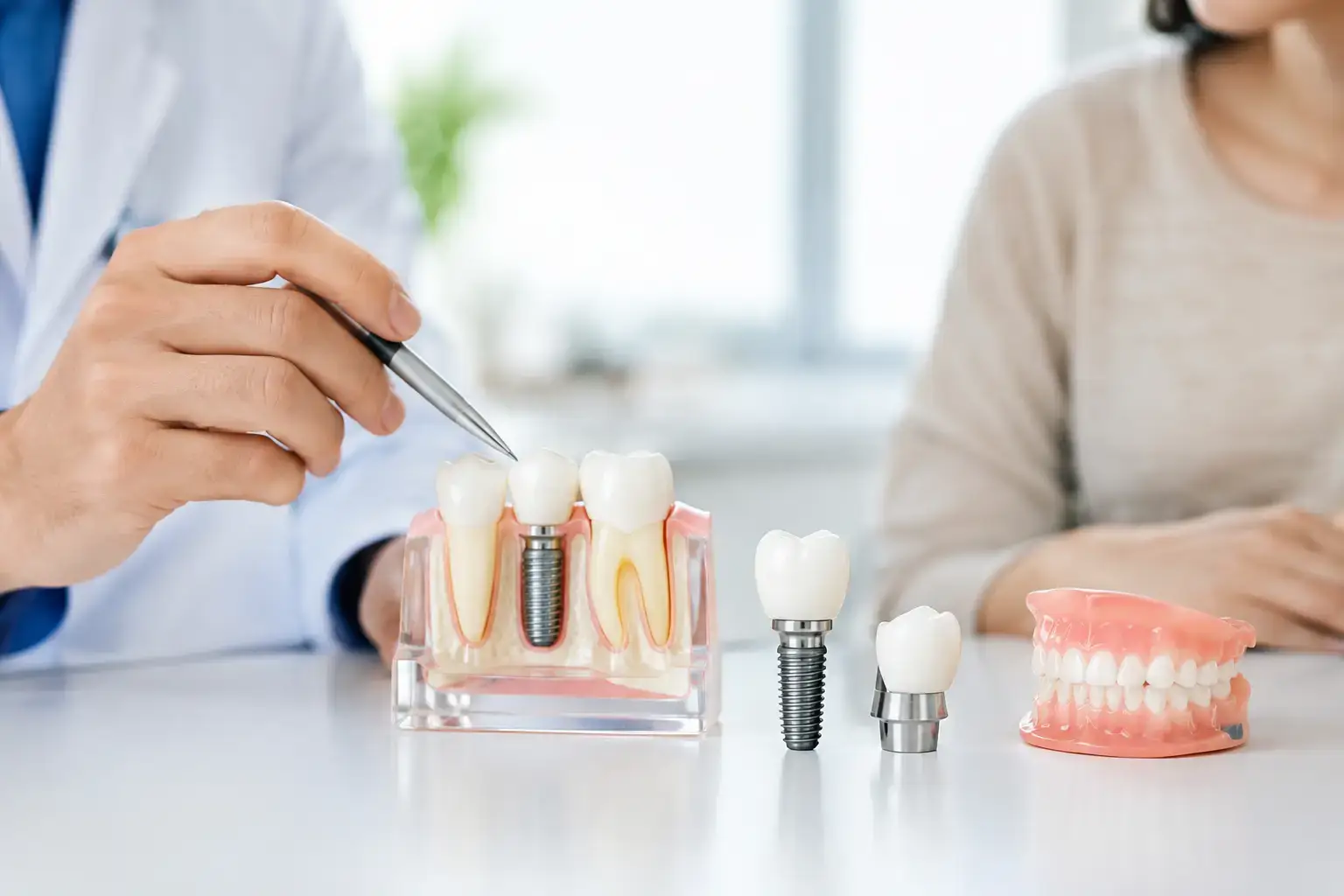
A same day implant usually means that a dental implant is placed and a temporary tooth is fitted during the same appointment. This may happen immediately after a tooth is removed, or in an area where a tooth has already been missing. You leave with the appearance of a complete smile rather than a visible gap.
It does not usually mean that the final crown is fitted on the same day. The implant still needs time to integrate with the jawbone, a process called osseointegration. Once healing is complete and the implant is secure, the temporary tooth is replaced with a carefully made permanent crown.
This distinction matters. The temporary tooth is designed primarily to protect the area and maintain your smile while healing takes place. It may not be intended to take the full force of biting and chewing, particularly in the early weeks.
Same day implant comparison: immediate versus conventional treatment
Conventional implant treatment follows a more staged timetable. If a failing tooth needs to be removed, the gum and bone may be allowed to heal first. The implant is then placed, followed by a further healing period before the final crown is fitted. In suitable cases, this approach can offer greater control where there has been infection, bone loss or a need for bone grafting.
The following comparison outlines the practical differences.
| Consideration | Same day implant with a temporary tooth | Conventional staged implant | |—|—|—| | Tooth replacement | Implant and temporary tooth may be provided at one visit | The gap may be managed while the site heals before restoration | | Overall timetable | Can reduce the number of treatment stages | Usually takes longer from extraction to final crown | | Initial appearance | Often avoids leaving a visible gap | A temporary denture, bridge or gap may be necessary initially | | Suitability | Requires good implant stability, favourable bone and a manageable bite | Can be preferable where healing, grafting or infection management is needed | | Healing considerations | Temporary restoration must be protected from excess pressure | Healing can take place before the tooth is loaded |
Neither route is automatically better. A prompt replacement can be highly appealing, especially for a front tooth, but the long-term success of the implant should always take priority over a shorter treatment timetable.
When can same day treatment be suitable?
A clinician will assess whether the implant can achieve strong initial stability in the jawbone. This is one of the most significant factors in deciding whether an immediate temporary tooth can be fitted safely. Bone volume and density, the position of the missing tooth and the health of the surrounding gum tissue all influence that decision.
Same day treatment may be considered where the extraction site is suitable, there is enough healthy bone to secure the implant and any infection can be managed appropriately. It can also be particularly useful for a tooth near the front of the mouth, where preserving the shape of the gum and avoiding a visible space are important concerns.
Your bite is equally relevant. If you clench or grind your teeth, or if the temporary tooth would meet heavily against an opposing tooth, it may be safer to use a different approach. An implant is strong once it has integrated with bone, but it needs protection while that biological bond is forming.
Smoking, poorly controlled diabetes and active gum disease can also affect healing. These factors do not always rule out implant treatment, but they should be addressed honestly as part of personalised planning.
Why waiting can sometimes be the better choice
It is understandable to want a tooth replaced as quickly as possible. However, an immediate implant is not a shortcut around careful treatment planning. Where a tooth has been removed because of significant infection, where the socket walls are damaged, or where there is insufficient bone, placing an implant straight away may compromise the result.
Waiting can give the area time to heal and can allow for bone grafting or gum treatment where needed. It may also make it easier to position the implant precisely for the final crown. This is especially valuable in the smile zone, where small differences in gum level, tooth shape and crown position can be noticeable.
A staged approach can feel less convenient at first, but it may reduce avoidable risk. A temporary solution can often be arranged so that you are not left without a tooth during the process.
The benefits patients value most
For suitable patients, same day implants can offer a real emotional and practical advantage. Leaving the practice with a temporary tooth can make speaking, smiling and attending work or social commitments feel far more comfortable. It can also help support the contours of the gum around the new tooth, which contributes to a natural final appearance.
There may be fewer overall treatment stages, particularly when an implant is placed at the time of extraction. This can reduce the period spent managing a failing tooth or a visible gap. Some patients also appreciate being able to move forward with treatment rather than waiting several months before the implant stage begins.
The central benefit is not simply speed. It is the possibility of replacing a tooth in a way that protects confidence while still following a clinically appropriate plan.
The limitations to understand before choosing
The phrase “same day” can create unrealistic expectations if it is not explained clearly. The permanent crown is typically made after healing, not at the first appointment. Your temporary tooth may need to be adjusted, and you may be advised to avoid biting into firm foods with it for a period of time.
There is also a risk that an implant will not integrate as intended. This is uncommon when treatment is well planned, but it is a recognised risk with every implant procedure. Applying too much pressure to a newly placed implant can increase that risk, which is why aftercare instructions are so important.
A same day option can also involve a more complex appointment and may not be the most cost-effective choice in every situation. The appropriate treatment plan should be based on clinical need, not on whether a procedure can be completed in one visit.
What happens at an implant consultation?
An implant consultation should begin with understanding what has happened to the tooth and what you would like to achieve. For some patients, restoring comfortable chewing is the priority. For others, the concern is a front tooth that affects the confidence to smile. Often, both matter.
Your dentist will examine your teeth and gums, assess your bite and take the relevant imaging to evaluate the jawbone and nearby structures. They will consider whether the tooth can be saved, whether an extraction is needed, and whether an immediate implant, delayed implant or another restoration is the most suitable option.
You should also receive a clear explanation of the expected timetable, the temporary tooth arrangement, likely aftercare and the costs involved. At Russell Avenue Dental & Implant Centre, treatment planning is designed around the clinical details of your smile rather than a one-size-fits-all promise.
Questions worth asking about same day implants
Before making a decision, ask whether you are a suitable candidate for an immediate temporary tooth and what factors support that recommendation. It is helpful to understand whether any bone grafting or gum treatment may be required, how long the final crown is likely to take and which foods you will need to avoid during healing.
You may also wish to ask how the temporary tooth will look, whether it will be fixed or removable, and what happens if the implant needs more time before it can be restored. Clear answers can make a significant treatment decision feel much more manageable.
The best implant plan is the one that gives your new tooth the strongest possible foundation. If that can be achieved with a same day temporary tooth, it can be a reassuring way to restore your smile. If waiting offers a safer or more aesthetic result, that extra time is an investment in the confidence and function you want to enjoy for years to come.