A tooth can look worn, chipped, discoloured or uneven for many different reasons. That is why the choice between veneers versus crowns should never be based on appearance alone. Both can create a natural-looking smile, but they are designed to solve different problems. The right treatment depends on how much healthy tooth structure remains, whether the tooth needs strengthening and what you would like to change.
What is the difference between veneers and crowns?
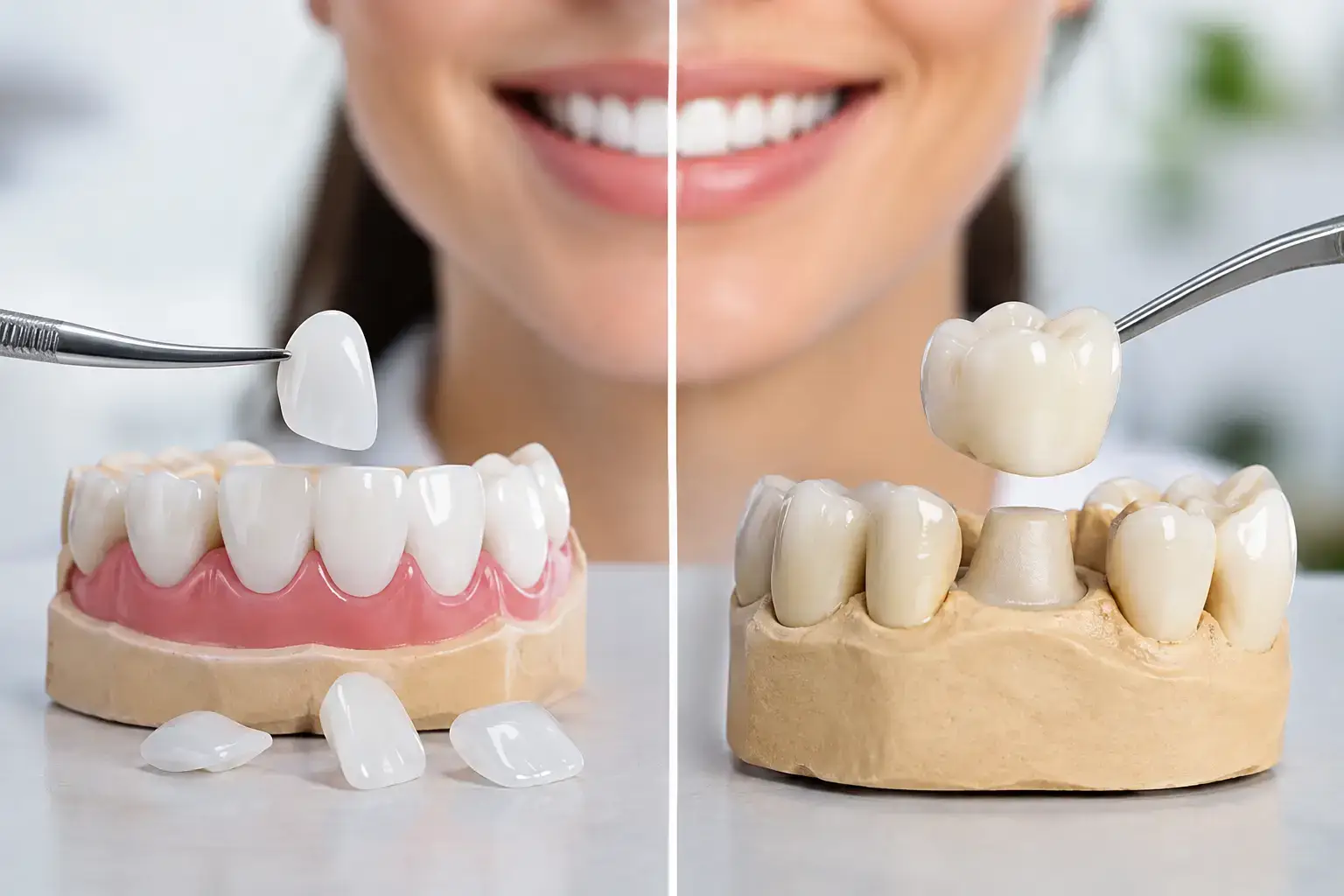
A veneer is a thin, custom-made facing bonded to the front surface of a tooth. Usually made from porcelain, it changes the visible part of the tooth while preserving much of the natural structure behind it. Veneers are principally an aesthetic treatment, although they can also restore small areas of wear or damage.
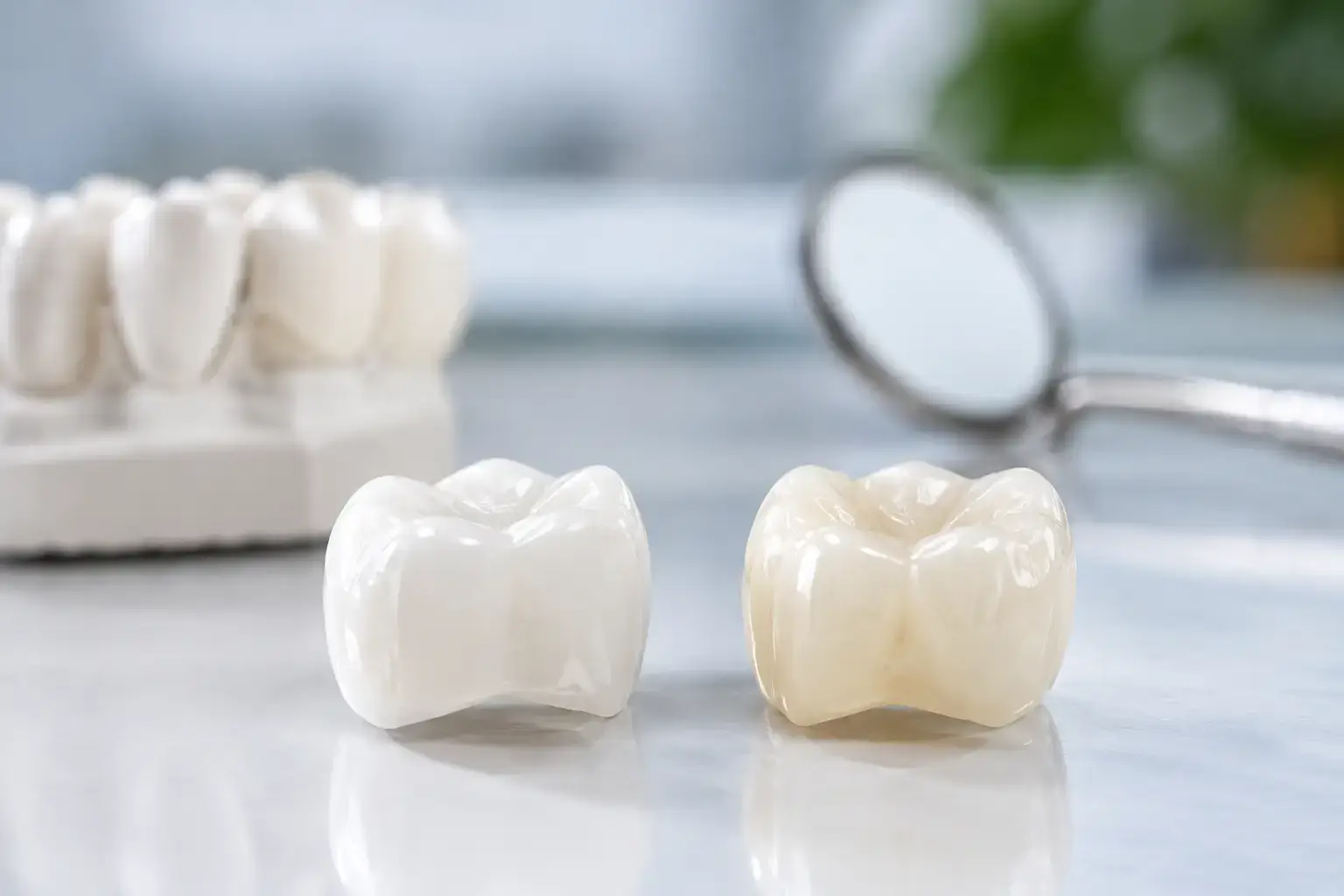
A crown covers the whole visible part of a tooth, rather than only its front. It is a restorative solution used when a tooth is weakened, heavily filled, cracked, significantly worn or has had root canal treatment. Modern crowns can be carefully colour-matched and shaped, so they can improve appearance as well as protect the tooth.
The distinction matters. Placing a veneer on a tooth that needs full protection may leave it vulnerable, while preparing a healthy tooth for a crown can remove more natural tooth structure than necessary.
When porcelain veneers may be suitable
Porcelain veneers are often considered when teeth are healthy but their appearance is affecting confidence. They can be used to improve persistent staining, minor chips, uneven edges, small gaps and slight irregularities in shape or alignment. Several veneers may be planned together where a patient would like a more balanced, brighter smile.
Because veneers are designed around your existing teeth, careful planning is essential. Your dentist will assess the bite, gum health, enamel and the way the teeth meet when you speak and chew. A veneer can be very conservative, but it is not always a no-preparation treatment. In many cases, a small amount of enamel must be shaped to create a result that looks natural rather than bulky.
When a dental crown may be suitable
A crown is generally recommended when the main priority is strength and protection. For example, a tooth with a large old filling may have thin remaining walls that could fracture under normal biting pressure. A crown holds and covers the tooth, helping it function more securely.
Crowns are also commonly used after root canal treatment, where a tooth may be more brittle, and to restore teeth with extensive decay or a sizeable fracture. They can be made from high-quality ceramic materials for a lifelike result, particularly in visible areas of the smile.
A crown also has an important role in implant dentistry. After a dental implant has integrated with the jawbone, a bespoke crown is attached to provide the visible replacement tooth. In this situation, there is no natural tooth underneath the crown. It is the final restoration that allows the implant to look, feel and function like a natural tooth.
Veneers versus crowns: how dentists decide
The decision is not simply about whether you want a cosmetic or restorative result. Many treatments deliver both. Instead, your dentist will look at the condition of each individual tooth and create a plan that supports your long-term oral health.
If a front tooth has a small chip, sound enamel and a shape you would like to refine, a veneer may be an excellent option. If that same tooth has a large filling, a crack extending through the tooth or substantial loss of structure, a crown may offer more reliable protection.
Your bite is another major consideration. Patients who clench or grind their teeth can place significant force on restorations. This does not automatically rule out veneers, but it may change the material, design or treatment recommendation. A protective night guard may also be advised to reduce the risk of chipping, fracture and premature wear.
Gum health must be stable before either treatment is placed. Bleeding gums, untreated decay or active gum disease need attention first. A beautiful restoration can only perform well when the tooth and supporting tissues are healthy.
Appearance, durability and tooth preparation
Both porcelain veneers and ceramic crowns can be made to blend beautifully with neighbouring teeth. The difference is in coverage. A veneer changes the front and edge of a tooth, while a crown recreates the entire visible tooth.
For patients hoping to brighten a smile, professional teeth whitening is often considered before veneers or crowns are colour-matched. Ceramic restorations do not respond to whitening gel in the way natural enamel does. Choosing the desired shade first helps avoid replacing otherwise sound restorations later simply because the surrounding teeth have become lighter.
Veneers typically require less tooth preparation than crowns, which can be an advantage where the tooth is structurally sound. Crowns require more space around the tooth so that the final restoration is strong enough and does not feel over-contoured. This is appropriate when a tooth needs full coverage, but it should be justified by the clinical condition of the tooth.
Neither option should be viewed as permanent without maintenance. With good home care, regular dental examinations and sensible habits, veneers and crowns can last for many years. Their lifespan varies according to the material, bite forces, oral hygiene, diet and whether they are used to bite hard foods or objects. Avoiding habits such as opening packaging with teeth or chewing pens protects both natural teeth and restorations.
What about composite bonding?
For small chips, worn corners or minor shape changes, composite bonding may sometimes be a more conservative alternative. Tooth-coloured composite is applied directly to the tooth and sculpted into place. It usually involves little or no removal of enamel and can be repaired more easily than porcelain if it chips.
However, composite can stain and wear more readily than porcelain, particularly over time. It may be ideal for a modest enhancement, but it cannot always provide the same translucency, durability or extensive shape change as a well-planned porcelain veneer. The best option depends on the result you want, the condition of the tooth and your preference for a reversible or longer-term approach.
A personalised treatment plan matters
Online photographs can make veneers and crowns appear interchangeable, yet a picture cannot show cracks, decay beneath an old filling, bite problems or the quality of the enamel. An examination allows these details to be assessed before any irreversible decision is made.
At Russell Avenue Dental & Implant Centre, treatment planning is based on what each tooth needs, not on a one-size-fits-all cosmetic package. Your dentist can discuss the expected appearance, the preparation involved, the likely longevity and any alternatives, so you know why a particular recommendation has been made.
If you are weighing up veneers versus crowns in St Albans, begin with the health and strength of your teeth, then consider the smile changes you would like to see. A thoughtful consultation can turn a difficult choice into a clear plan that protects your teeth and helps you smile with greater confidence.