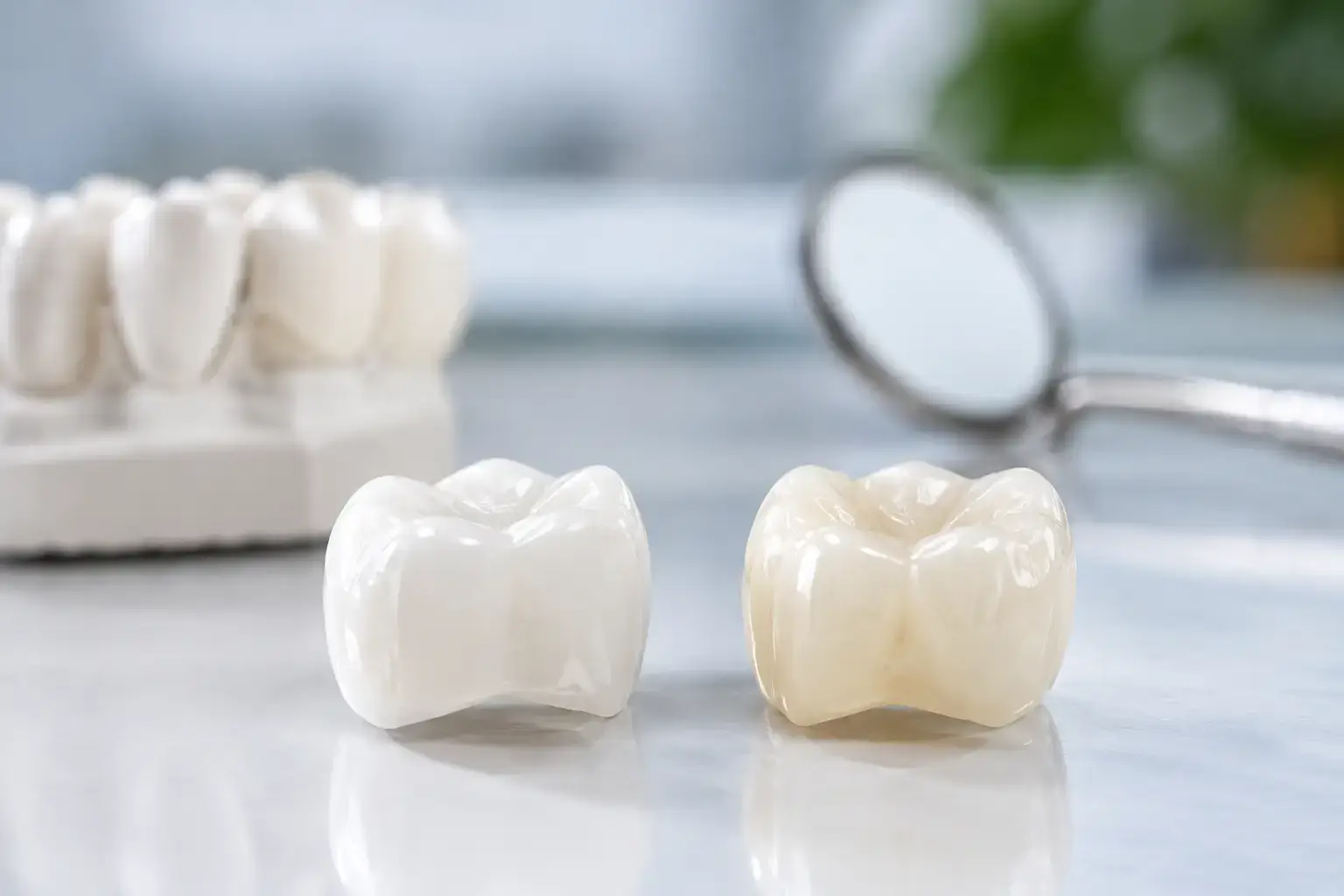

A bridge can look intact from the outside while the teeth beneath it are under strain. This replacing failed bridge treatment example shows why a detailed assessment matters, and how an implant-supported solution may restore comfort, function and confidence when an existing bridge can no longer be relied upon.
Why dental bridges can fail
A traditional dental bridge replaces a missing tooth by attaching a false tooth to crowns fitted over the teeth on either side of the gap. It can be an effective treatment, particularly when the supporting teeth are healthy and the bite is well balanced. However, bridges are not designed to last indefinitely.
Failure may happen because decay develops at the edge of a crown, gum disease affects the supporting teeth, or repeated biting forces loosen the cement. Occasionally, a bridge fails because one of its supporting teeth cracks or has already been weakened by a large filling or root canal treatment. Patients may notice movement, a bad taste, bleeding gums, pain when chewing or a dark line around the crown. In other cases, there may be no obvious warning until a routine examination or X-ray reveals a problem.
The right answer is not always simply to fit another bridge. Replacing it without addressing the reason it failed can place the new restoration at risk too.
A failed bridge treatment example
Consider a patient who had lost an upper premolar several years earlier. Their original three-unit bridge used the neighbouring teeth as supports. Over time, food began catching around one edge of the bridge and the gum became sore when brushing. Although the bridge itself still appeared reasonable, the patient noticed an occasional unpleasant taste and was becoming reluctant to chew on that side.
At their consultation, the bridge was examined closely and X-rays were taken to assess the teeth, roots and supporting bone. The assessment showed decay beneath one of the crowns. The supporting tooth had also lost a significant amount of healthy structure, meaning that replacing the bridge in the same way would not offer a predictable long-term result.
The bridge was carefully removed so the underlying teeth could be assessed directly. One supporting tooth was treatable and could be restored. The other was too compromised to support a new crown reliably and required removal. This left a wider gap, but it also created an opportunity to replace the missing teeth without putting further pressure on the remaining natural tooth.
After healing and careful planning, two dental implants were placed in the spaces left by the missing teeth. Once the implants had integrated with the jawbone, they were restored with individual implant crowns. The patient was able to clean between the teeth more easily, chew with greater security and smile without worrying that the bridge would loosen.
This is only one example. Some failed bridges can be replaced with a new bridge, while others may be better treated with one implant, several implants or a removable option. The choice depends on the condition of the teeth and gums, the amount of available bone, your bite and your long-term priorities.
Why implants may be considered after a bridge fails
An implant is a small titanium post placed in the jawbone to support a replacement tooth. Unlike a conventional bridge, it does not rely on neighbouring teeth for support. This can be particularly valuable where those teeth have already been heavily prepared, weakened or affected by decay.
For suitable patients, implant treatment can provide a fixed replacement that feels stable when speaking and eating. It may also help preserve bone in the area of a missing tooth, as the implant transfers chewing forces into the jaw. The final crown is designed to blend with the shape and colour of the surrounding teeth, while being planned with access for effective cleaning.
There are trade-offs to consider. Implant treatment involves a surgical procedure, a healing period and a greater initial investment than some bridge options. If there is not enough bone in the area, additional treatment such as bone grafting may be recommended. Smoking, uncontrolled gum disease and certain medical conditions can also affect suitability and must be discussed openly.
For some patients, a new bridge remains the most appropriate choice. This may be the case when neighbouring teeth already need crowns, when implant placement is not clinically advisable or when treatment needs and budgets point towards a different approach. Good treatment planning is about finding the option that is right for you, not applying the same solution to every gap.
How treatment is planned
A failed bridge deserves more than a quick repair. The first stage is a thorough consultation, including an examination of the bridge, gums, bite and surrounding teeth. X-rays, and in some cases three-dimensional imaging, allow the clinician to assess root health and bone levels beneath the surface.
Your dentist will then explain whether the bridge can be repaired, whether the supporting teeth can be restored, and what replacement options are realistic. If an implant is being considered, planning also includes the ideal position of the final tooth. This restorative-led approach helps ensure the implant is placed to support a natural-looking and functional crown, rather than simply filling a space.
Where an old bridge is removed, a temporary tooth replacement may be provided when appropriate. This helps maintain appearance while the mouth heals or while implant treatment is underway. The timing varies. Some patients can have an implant placed soon after a tooth is removed, while others benefit from a period of healing first. It depends on infection levels, bone quality, gum health and the stability needed for a predictable result.
Looking after a replacement tooth
Whether you choose a new bridge or an implant crown, home care and regular professional reviews are central to its longevity. A replacement tooth cannot decay, but the gum and bone around it still need protection. Natural teeth supporting a bridge remain vulnerable to decay at the margins of their crowns.
Daily brushing is essential, with particular attention to the gumline. For a bridge, specially designed interdental brushes or floss threaders can help clean beneath the false tooth. For implants, the aim is to remove plaque carefully around the implant crown and between neighbouring teeth. Your dental team can show you techniques and products suited to the shape of your restoration.
Regular hygiene appointments and examinations allow early signs of inflammation, wear or loosening to be identified before they become a larger problem. If you grind your teeth, a protective night guard may also be advised to reduce damaging pressure on a bridge, crown or implant restoration.
When to arrange an assessment
Do not wait for a bridge to fall out before seeking advice. Persistent tenderness, bleeding around a crown, a change in how your teeth meet, food trapping, movement or a recurring bad taste all warrant a dental assessment. Even a bridge that feels comfortable may need attention if it is older, difficult to clean or supported by teeth with a history of treatment.
At Russell Avenue Dental & Implant Centre in St Albans, a consultation can clarify what is happening beneath an existing bridge and set out your options in a calm, structured way. A failed bridge can be unsettling, but with careful diagnosis and personalised planning, it can become the starting point for a healthier, more secure smile.