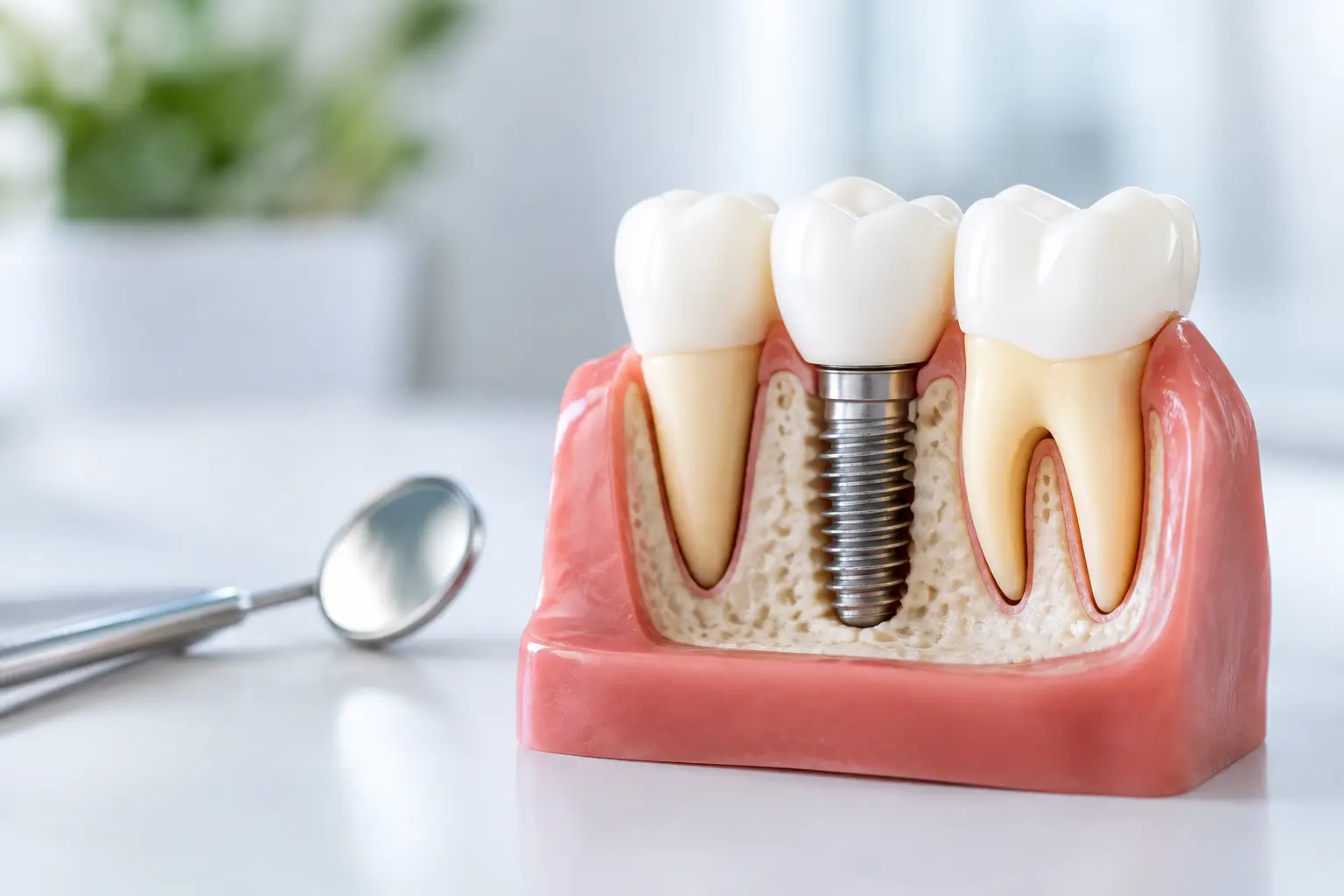
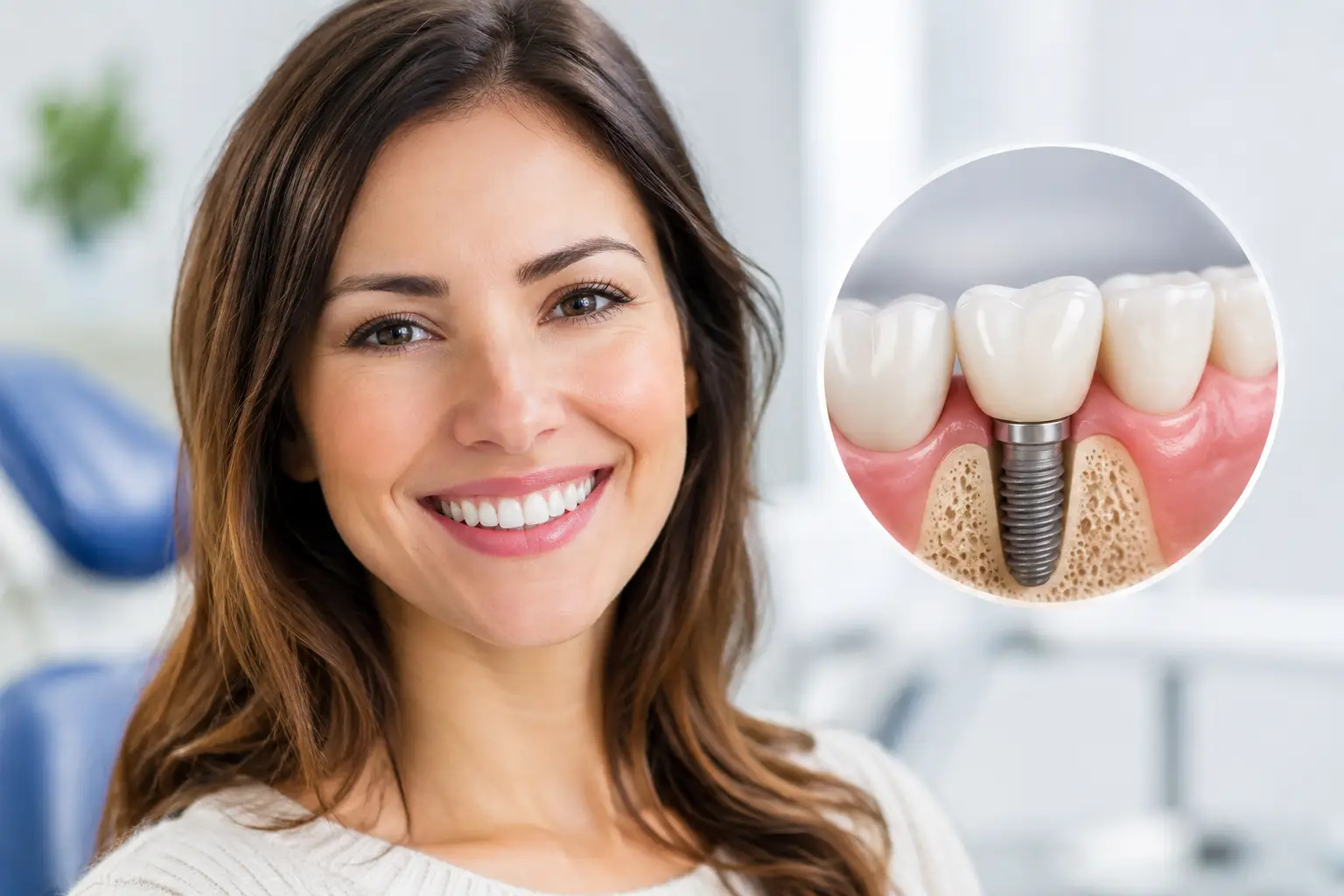
A missing front tooth is rarely just a practical concern. It can affect how comfortably you speak, smile in photographs or meet people at work. This front tooth implant case study follows an illustrative treatment journey for a patient replacing a failing upper front tooth, showing why careful planning matters as much as the implant itself.
The front of the mouth is one of the most demanding areas for implant treatment. The replacement tooth needs to function reliably, but it also has to sit naturally within the smile, support the gum line and reflect light in a way that does not draw attention. For this reason, treatment is planned around the whole smile rather than simply filling a space.
The starting point: a failing upper front tooth
Our patient had an upper central incisor that had been treated with root canal therapy many years earlier. Over time, the tooth had darkened and become increasingly loose. A crack beneath the gum line meant it could not be predictably restored with a new crown.
Although there was no significant pain, the patient was concerned about the tooth failing unexpectedly. They also wanted to avoid a removable denture and were understandably worried that a replacement might look artificial next to their natural teeth.
Before recommending an implant, the dentist carried out a full examination. This included assessing the health of the gums, the position of the adjacent teeth, the bite and the amount of supporting bone. Detailed imaging helped establish whether there was sufficient bone for an implant and whether the extraction could be planned in a way that preserved the surrounding tissues.
This stage is particularly important for a front tooth. Bone and gum tissue can reduce after an extraction, especially where infection or trauma has been present. A personalised plan allows the clinician to decide whether an implant can be placed at the time of extraction, or whether the area should heal first and be rebuilt where needed.
Why the treatment plan was not rushed
In this case, the scan showed that the tooth could be removed carefully and an implant placed during the same appointment. However, an immediate implant is not automatically the best option for every patient. The decision depends on factors such as the condition of the socket, the stability available for the implant, the gum type, bite forces and any evidence of active infection.
For this patient, immediate placement offered a valuable advantage: it helped maintain the contour of the gum and supporting bone around the front tooth. A small amount of bone grafting material was also used to support the facial aspect of the site, where the bone is naturally thin.
The aim was not simply to place an implant quickly. It was to create the best possible foundation for a crown that would look balanced in the smile over the long term.
Creating a temporary tooth
The patient did not leave with a visible gap. A carefully designed temporary tooth was fitted to maintain appearance while the implant healed. It was kept out of heavy biting contact so that the implant could integrate securely with the bone without excessive pressure.
Temporary teeth play a useful role in aesthetic implant care. They allow the patient to smile with confidence during treatment, while also helping the clinical team shape and monitor the gum line. Small adjustments can be made as healing progresses, encouraging the tissue to develop a natural contour around the future crown.
Patients are advised to follow a soft-food diet initially and to avoid biting directly into foods such as apples, crusty bread or sandwiches with the temporary tooth. Good cleaning remains essential, although the area must be cared for gently in the early stages.
Healing and reviewing the implant
Over the following months, the implant was reviewed at planned intervals. The gum tissue settled well, with no signs of infection or inflammation, and the implant integrated successfully with the bone.
Healing time varies. Some patients may be ready for the final crown after around three months, while others need longer, particularly if grafting has been required or healing has been slower than expected. Smoking, uncontrolled gum disease and certain medical conditions can affect healing and will be discussed openly during consultation.
At the review appointments, the focus was not only on whether the implant was stable. The dentist also assessed the gum height, the symmetry with the neighbouring front tooth and how the temporary tooth looked when the patient spoke and smiled. These details have a considerable influence on the final aesthetic result.
Completing the front tooth implant case study
Once the implant and gums were ready, digital impressions were taken to plan the final crown. The shade was matched to the surrounding teeth under appropriate lighting, taking account of the natural variation in colour found in real enamel. Front teeth are rarely one flat shade, so translucency, brightness and character were considered when designing the restoration.
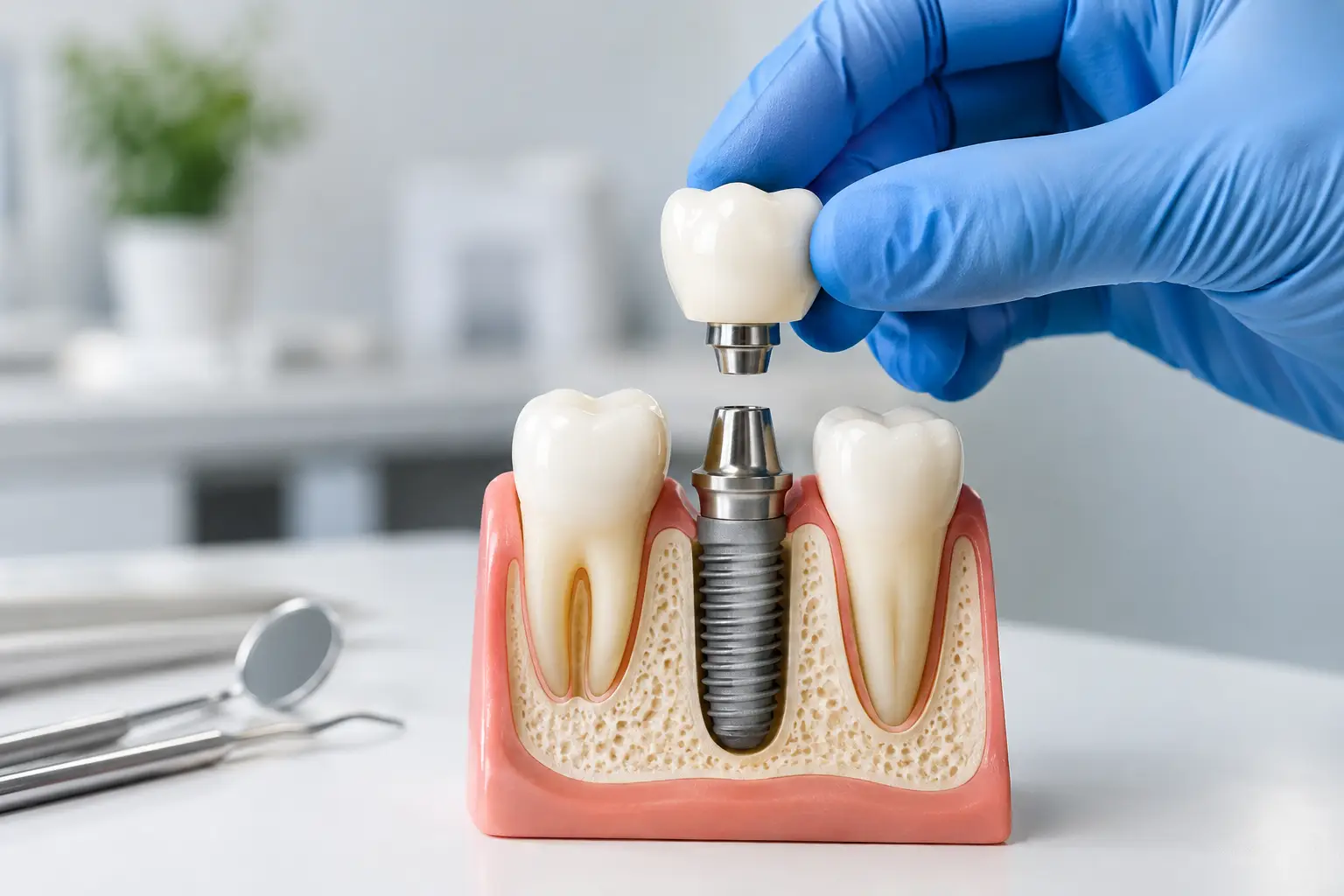
A bespoke porcelain crown was then made and attached to the implant. It was shaped to complement the adjacent tooth, rather than attempting to create an overly uniform or unnaturally bright result. The bite was checked carefully, as excessive contact can place unnecessary strain on an implant crown.
The final result restored the appearance of the smile and gave the patient a fixed replacement tooth that felt secure for everyday eating and speaking. Just as importantly, the treatment respected the surrounding gum tissue, helping the crown emerge naturally from the gum line.
What makes a front implant look natural?
A successful front tooth implant is the result of several decisions made well before the final crown is fitted. Implant position is fundamental. Even a small difference in angle or depth can affect the way the crown meets the gum and sits alongside neighbouring teeth.
Gum health and tissue volume are equally important. Where a patient has lost gum or bone following an extraction, trauma or long-standing infection, additional grafting or soft-tissue treatment may be recommended. This can add time and cost, but may be worthwhile when creating a stable, natural-looking result in such a visible area.
The quality of the final crown also matters. A well-made crown should be selected for its shape, proportion and colour, not simply whiteness. Patients considering whitening may choose to whiten their natural teeth before their final implant crown is made, as porcelain itself will not respond to whitening treatment.
Looking after an implant crown
Dental implants are designed as a long-term tooth replacement, but they still require daily care and regular professional review. The crown cannot decay, yet the gum and bone around the implant can become inflamed if plaque is allowed to build up.
The patient was shown how to brush carefully around the gum line and clean between the implant crown and neighbouring teeth with the most suitable interdental aids. Routine hygiene appointments and dental examinations help identify early changes before they become more difficult to manage.
An implant may be a strong, fixed solution, but it is not maintenance-free. Protecting it means caring for the gums around it just as diligently as the rest of the mouth.
Is a front tooth implant right for you?
An implant can be an excellent option for replacing a single missing or failing front tooth, particularly for patients who want to avoid a removable denture or do not wish to reduce healthy neighbouring teeth for a bridge. That said, every case is different. Bone levels, gum condition, bite, general health and cosmetic expectations all need to be assessed before treatment begins.
At Russell Avenue Dental & Implant Centre in St Albans, a consultation provides the opportunity to discuss your concerns, examine the area properly and understand whether an implant, bridge or another restorative option is most appropriate. A considered plan can make the prospect of replacing a front tooth feel far more manageable, with each stage focused on protecting your oral health and helping you smile with confidence.