A dental implant can look and feel remarkably like a natural tooth, but it still relies on healthy gum tissue and strong bone beneath the surface. That is why understanding how gum disease affects implants matters before treatment begins and throughout the life of an implant. Gum disease does not automatically rule out implant treatment, but active disease needs to be managed carefully to give your new tooth the best possible foundation.
For patients replacing a missing tooth, implants can restore comfortable chewing, support facial appearance and remove the inconvenience of a removable denture. However, long-term success is not simply about placing the implant successfully. It is also about protecting the tissues around it with good home care, regular professional maintenance and early attention to changes in the gums.
Why healthy gums matter for dental implants
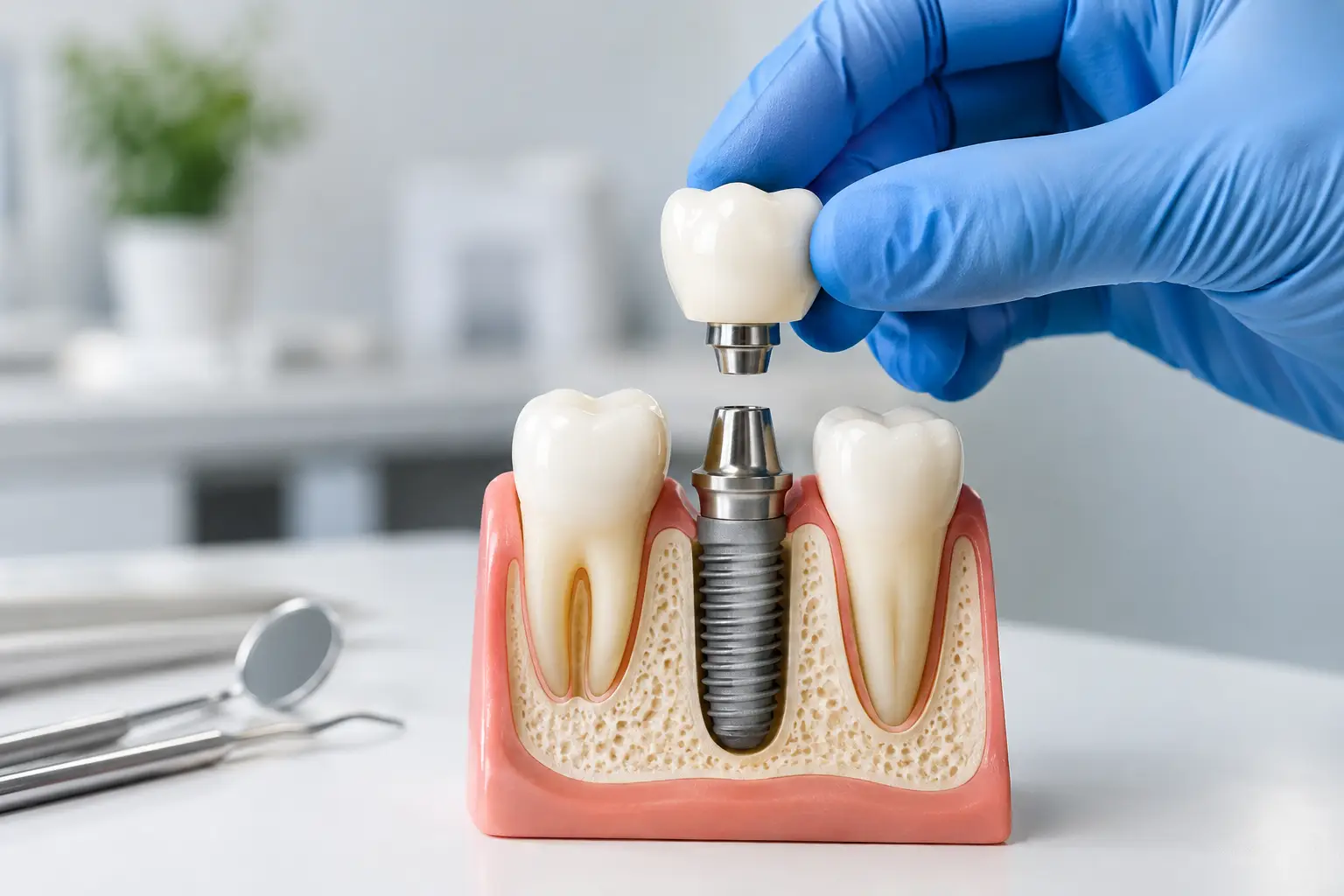
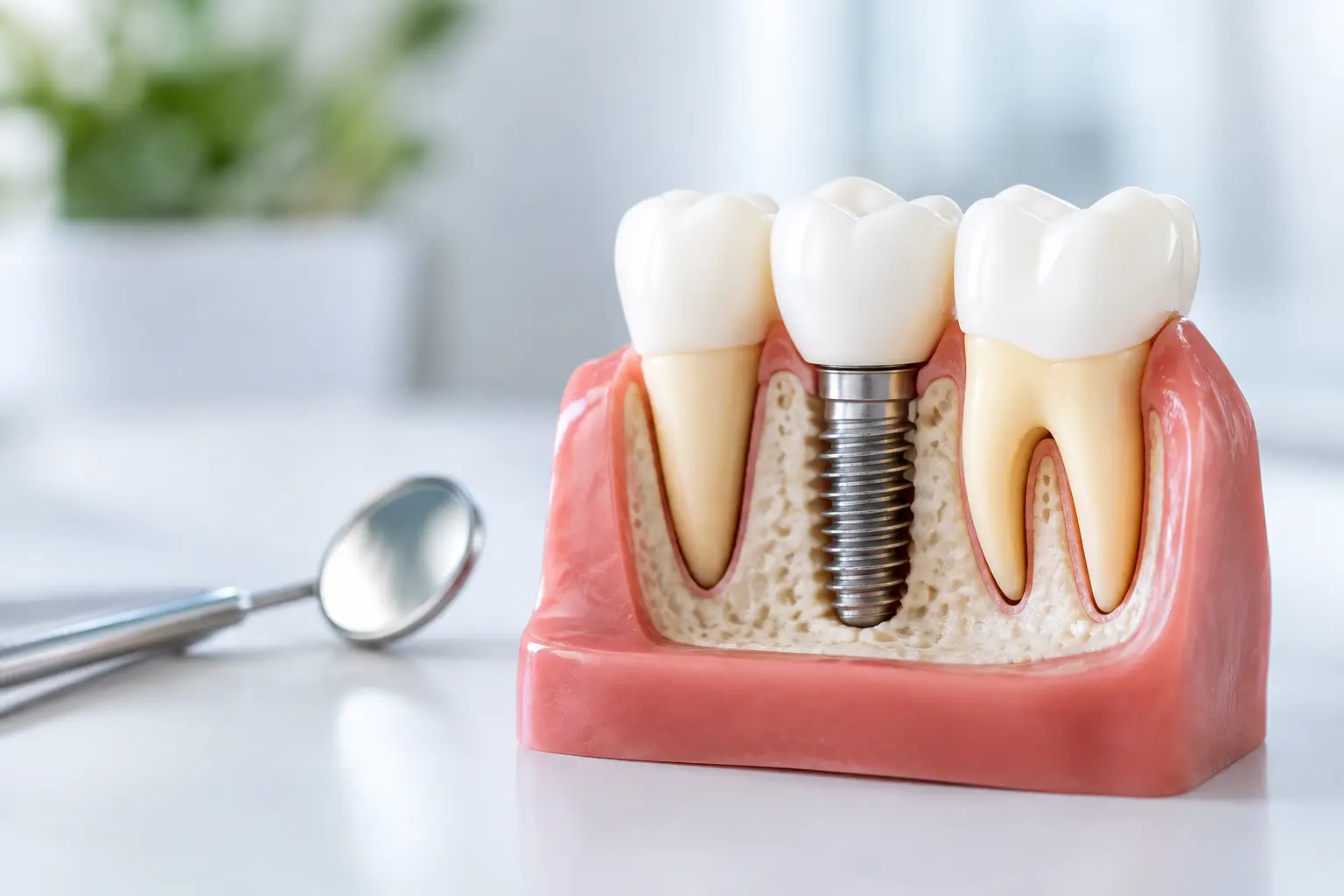
A dental implant is a small titanium post placed into the jawbone to support a crown, bridge or denture. Over time, the bone integrates with the implant, creating a stable base for the visible restoration. The gum around the implant forms a protective seal at the neck of the tooth, helping to reduce the entry of bacteria into the deeper tissues.
Natural teeth and implants are not identical. A natural tooth is supported by specialised fibres and a ligament that connects it to the jawbone. An implant has a different attachment to the surrounding soft tissue. This means bacterial plaque can sometimes progress around an implant more quickly if inflammation is allowed to continue unchecked.
Healthy gums are therefore part of the treatment plan, not an afterthought. Before recommending implants, a dentist will assess the condition of your gums, the available bone, your bite, existing restorations and how easy it will be for you to clean the final result.
How gum disease affects implants before treatment
Gum disease begins when plaque bacteria build up around the gumline. In its earliest form, known as gingivitis, gums may bleed during brushing, look red or feel tender. Gingivitis can usually be reversed with effective cleaning and professional care.
If it progresses to periodontitis, the inflammation can damage the supporting bone around natural teeth. Teeth may become loose, the gums may recede, and tooth loss can eventually follow. Periodontitis also has implications for implants because it may reduce the amount or quality of bone available and signals that the mouth has been susceptible to harmful bacterial activity.
This does not mean that someone with a history of gum disease cannot have implants. Many patients go on to have successful implant treatment once their periodontal health is stable. The key is timing. Placing an implant while gum disease is active would expose the new implant to an inflamed, bacteria-rich environment and increase avoidable risk.
Where needed, treatment may involve professional gum therapy, improved plaque control at home and a period of review to confirm the gums are responding well. If bone has been lost, bone grafting may also be considered as part of a personalised plan. The right approach depends on the site, the degree of bone loss, your medical history and the type of restoration being planned.
Gum inflammation around implants: mucositis and peri-implantitis
Gum disease can also develop around an implant after it has been placed. The two main conditions are peri-implant mucositis and peri-implantitis.
Peri-implant mucositis is inflammation limited to the soft gum tissue around an implant. It may cause bleeding when brushing or during a dental examination, swelling, soreness or a change in the gum’s appearance. At this stage, there is no loss of supporting bone, and the condition can often be resolved with timely professional cleaning and improved daily plaque removal.
Peri-implantitis is more serious. It involves inflammation around the implant together with loss of the supporting bone. Left untreated, it can compromise the implant’s stability. Treatment can be more complex than treating early inflammation, which is why routine reviews are so valuable.
Warning signs worth acting on
Implants should not bleed, feel persistently sore or develop a bad taste. Arrange a dental assessment if you notice several of the following changes:
- bleeding from the gum around an implant
- swelling, tenderness or redness that does not settle
- discharge, pus or an unpleasant taste
- recession that makes the implant crown appear longer
- difficulty cleaning around the restoration
- a feeling that the crown, bridge or implant is moving
A loose crown does not always mean the implant itself is loose, but it should still be checked promptly. The cause may be a repairable issue with the crown or retaining screw, rather than failure of the implant. A clinical examination and, where appropriate, X-rays are needed to identify what is happening below the gumline.
Who may be at greater risk?
Previous periodontitis is one recognised risk factor, especially if it has not been fully controlled. Smoking also affects healing and can make gum problems harder to manage. Poorly controlled diabetes, inconsistent cleaning, missed maintenance appointments and a restoration shape that traps plaque can all contribute.
Grinding or clenching may place excessive force on an implant restoration. This is different from gum disease, but it can complicate matters when inflammation is already present. In some cases, a protective night guard and adjustments to the bite are part of protecting the final result.
Risk is not all-or-nothing. A person who had gum disease years ago but now attends hygiene appointments, does not smoke and maintains excellent daily cleaning may be a suitable implant candidate. Conversely, someone with no previous diagnosis can develop problems if plaque is allowed to accumulate around an implant. Your individual risk should guide the maintenance schedule rather than a one-size-fits-all timetable.
Protecting implants for the long term
Daily cleaning is essential, but it needs to be adapted to the restoration. A single implant crown may be cleaned in a similar way to a natural tooth, with careful brushing at the gumline and appropriate interdental cleaning. Implant bridges and full-arch restorations can have spaces underneath or between sections that require interdental brushes, floss designed for bridgework or other aids recommended by your dental team.
Technique matters more than force. Scrubbing hard will not remove plaque more effectively and may irritate the gums. The goal is to clean gently and thoroughly where the crown meets the gum, including the areas that are least visible in the mirror.
Regular professional reviews provide another layer of protection. Your dentist or hygienist can assess gum health, plaque levels, bite forces and the condition of the restoration, as well as compare X-rays over time where clinically appropriate. These appointments are designed to spot small changes before they become more difficult to treat.
For patients with a history of periodontal disease, maintenance may be advised more frequently than for someone with low risk. This is not a sign that an implant is failing. It is a sensible way to protect an investment in your oral health, comfort and confidence.
What happens if gum disease is found around an implant?
The treatment will depend on whether the problem is soft-tissue inflammation or bone loss, how far it has progressed and how accessible the area is for cleaning. Early mucositis may be managed with professional decontamination, advice on home cleaning and review appointments to ensure the gums have settled.
When peri-implantitis is present, the aim is to control infection and prevent further bone loss. Care may involve cleaning below the gumline, addressing plaque-retentive features of the crown or bridge, improving access for daily cleaning and, in selected cases, surgical treatment. No responsible clinician can promise the same outcome for every implant, particularly where bone loss is advanced. Early assessment gives the best opportunity to preserve the implant.
At Russell Avenue Dental & Implant Centre in St Albans, implant planning is consultation-led because the condition of your gums, bone and bite should shape every stage of treatment. A careful assessment before treatment, followed by committed maintenance afterwards, gives an implant the strongest possible chance of remaining healthy, comfortable and natural-looking for years to come.