A missing tooth can affect far more than the appearance of your smile. It can change how confidently you eat, speak and laugh, while gaps may allow neighbouring teeth to shift over time. When weighing up dental implants versus dentures, the right option is rarely about one treatment being universally better. It is about choosing a solution that suits your mouth, health, priorities and plans for the years ahead.
For some people, a removable denture is a practical and effective way to restore several missing teeth. For others, implants provide the fixed, natural-feeling replacement they have been looking for. Understanding the differences can make the decision feel much clearer.
Dental implants versus dentures: the key difference
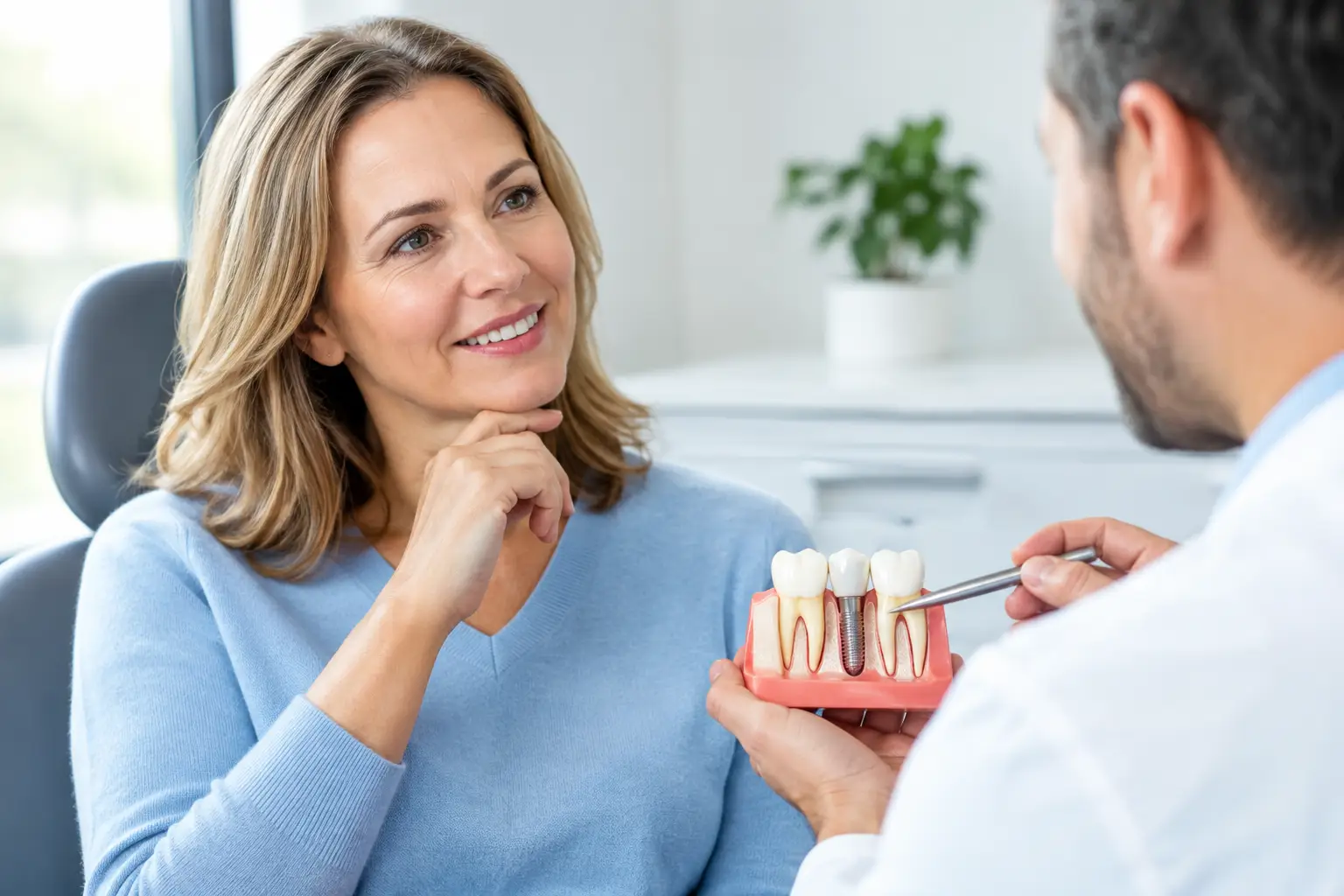
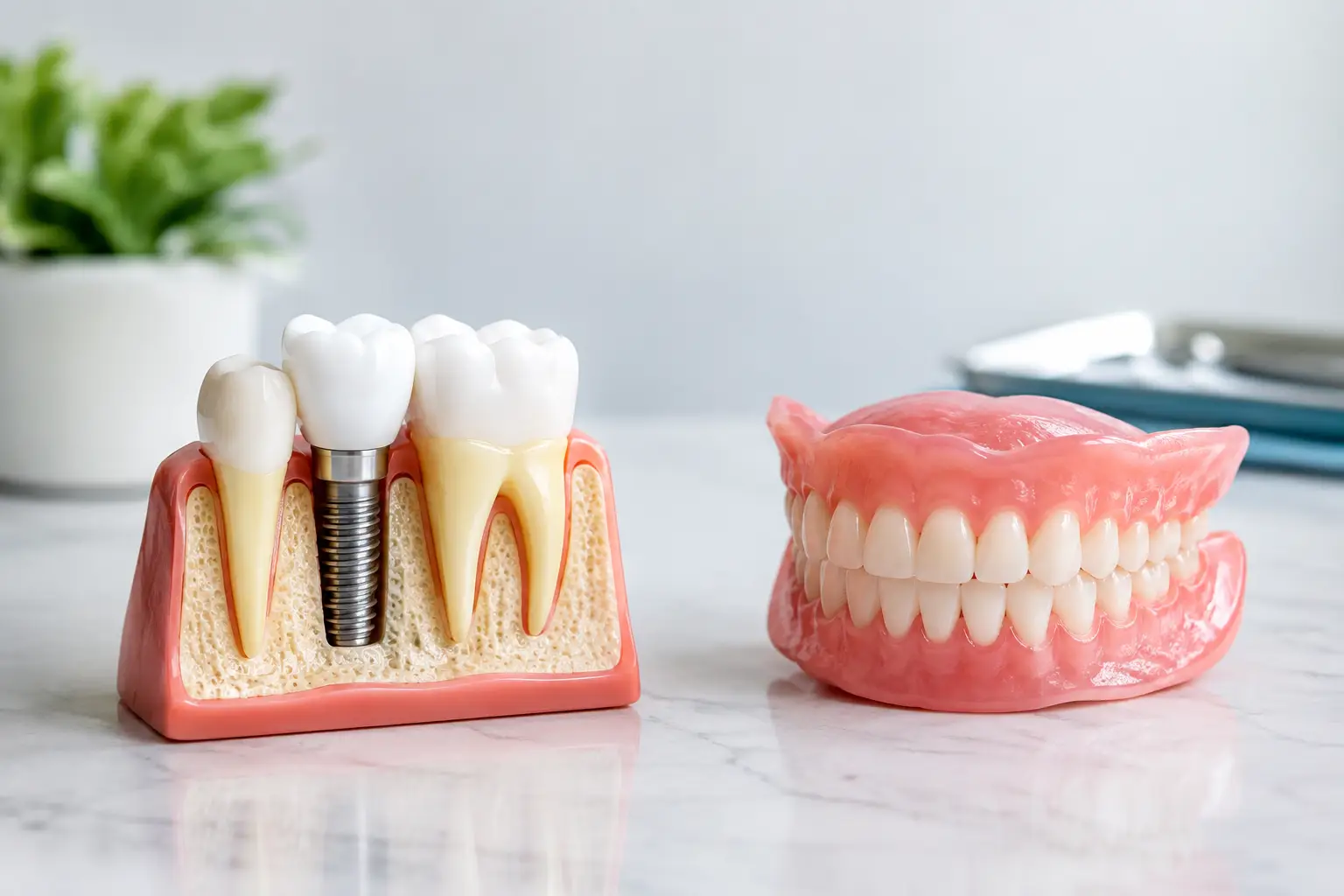
A dental implant replaces the root of a missing tooth as well as the visible tooth above the gum. A small titanium implant is placed carefully into the jawbone, where it integrates with the bone during healing. Once stable, it can support a crown for one missing tooth, a bridge for several teeth or a full arch of replacement teeth.
Dentures sit on the gums and replace the visible portions of missing teeth. They may be partial dentures, designed to fit around remaining natural teeth, or full dentures when all teeth in an arch are missing. Conventional dentures are removable for cleaning and are usually made from acrylic, sometimes with a metal framework for added support.
This distinction matters. Implants are fixed in place and use the jawbone for support, while traditional dentures rest on the gums. Both can improve appearance and function, but they feel and behave differently in everyday life.
How implants and dentures feel day to day
Many patients considering treatment are most concerned about comfort. A well-made denture should be carefully fitted and can look highly natural. However, because it is removable, it may move slightly during eating or speaking, particularly as the gums and underlying bone change shape. Denture adhesive can help in some cases, but it does not stop those long-term changes.
Dental implants are designed to remain stable. An implant-supported crown or bridge does not cover the palate, move against the gum or need to be removed at night. This can make eating, speaking and smiling feel more natural. Patients often value being able to choose foods with greater confidence, rather than planning around what a denture can comfortably manage.
That said, adaptation is individual. Some patients are very comfortable with dentures, especially when they have worn them for many years. Others find even a small degree of movement frustrating. A consultation should consider not only the number of missing teeth, but also your expectations around stability, speech and daily routine.
Eating and speech
Dentures can restore basic chewing ability, although hard, sticky or chewy foods may still be challenging. Some people notice a short adjustment period with pronunciation, especially with an upper denture that covers the roof of the mouth.
Implants generally provide stronger chewing function because the replacement teeth are anchored in the jaw. A single implant crown is intended to function much like a natural tooth. Fixed implant bridges can also offer substantial support for people replacing several teeth or an entire arch.
Appearance and confidence
Both treatments can be designed to complement your natural facial features and smile. A denture can replace lost teeth and support the lips and cheeks where teeth have been missing for some time. Implant crowns and bridges can be colour-matched and shaped to blend with surrounding teeth.
The confidence difference often comes from security rather than appearance alone. Knowing a restoration is fixed can remove the worry that it may lift, click or loosen during a meal or conversation.
Bone health and the long-term picture
After a tooth is lost, the jawbone in that area no longer receives the stimulation created by chewing through the tooth root. Over time, the bone can gradually reduce in volume. This is a natural process, but it can affect facial support and the fit of a denture.
Because implants are placed in the jawbone, they can help preserve bone in the area of a missing tooth. They do not prevent every age-related change in the mouth, but they provide the stimulation that a missing tooth root once supplied. This is one reason implants are often viewed as a long-term solution.
Dentures do not stimulate the jawbone in the same way. As the ridge changes, a denture may eventually require adjustment, relining or replacement to maintain a secure fit. This does not make dentures the wrong choice. It simply means ongoing maintenance should be part of the decision from the outset.
If bone has already been lost, implant treatment may still be possible. Some patients need additional planning, such as bone grafting, before implants can be placed. The suitability of treatment can only be confirmed through a clinical examination and appropriate imaging.
Treatment time, surgery and recovery
Dentures are often the quicker option. In some situations, an immediate denture can be fitted on the day teeth are removed, so you are not left with visible gaps while the gums heal. A more definitive denture may then be made or adjusted once the mouth has settled.
Implant treatment takes longer because healing is an essential part of the process. Following implant placement, time is needed for the implant to integrate with the bone before the final crown, bridge or implant-retained denture is fitted. The exact timeline varies according to the site, bone quality, whether teeth need to be removed and the type of restoration planned.
The surgical aspect can understandably make some people hesitant. Implant placement is a carefully planned procedure carried out under local anaesthetic, and many patients find recovery more manageable than they expected. Temporary options may be available while healing takes place, depending on your circumstances.
Cost and value: looking beyond the initial fee
The upfront cost of dentures is usually lower than that of dental implants. For a patient who needs an affordable or relatively prompt replacement, this can be an important advantage. Dentures may also be the most appropriate option where surgery is not suitable or simply not desired.
Implants involve surgical planning, components, clinical time and a bespoke final restoration, so the initial investment is higher. However, when considering value, it is worth including likely future maintenance. Dentures may need relines, repairs or replacement as the mouth changes. Implant restorations also require maintenance and may need repair or renewal over many years, but the implant itself can provide a durable foundation when cared for well.
A personalised treatment plan should set out the expected stages, costs and maintenance requirements clearly. The best decision is one that feels clinically appropriate and financially comfortable, rather than one based on the initial figure alone.
Caring for each option
Dentures must be removed and cleaned daily. They should be brushed with an appropriate denture brush and cleaner, then stored as advised by your dentist. The gums, tongue and any remaining natural teeth still need thorough cleaning. Regular dental visits remain important, even when all teeth have been replaced.
Implant crowns and bridges need the same disciplined approach as natural teeth: twice-daily brushing, cleaning between the teeth and regular professional reviews. Special brushes or interdental aids may be recommended for bridges. Implants cannot develop decay, but the gum and bone around them can become inflamed without effective cleaning, which can threaten their long-term stability.
Neither option is maintenance-free. The difference is that implant care is closer to caring for fixed natural teeth, while denture care includes cleaning the appliance and managing fit over time.
When dentures may be the better choice
Dentures remain a valuable treatment, not a second-best option. They may be well suited to someone who needs to replace multiple teeth without surgery, wants a quicker route to restoring their smile, or has medical or anatomical factors that make implants less suitable.
They can also be used as part of an implant plan. For example, a loose lower denture may be secured with a small number of implants, creating an implant-retained denture that is far more stable while remaining removable for cleaning. This middle ground can be a particularly effective option for patients who want greater confidence without a full fixed bridge.
Making a decision that feels right for you
The decision between implants and dentures should begin with a close assessment of your gums, remaining teeth, bone levels, bite and general health. Your dentist should also ask about the practical details: the foods you miss eating, whether your current denture moves, how you feel about surgery and what you want your smile to look like.
At Russell Avenue Dental & Implant Centre in St Albans, treatment planning is centred on those individual considerations. Sometimes the most suitable answer is a single implant. Sometimes it is a carefully designed denture, an implant-retained denture or a combination of treatments.
If missing teeth are making you hold back, a consultation can give you a clear view of what is possible. The aim is not simply to fill a gap, but to choose a replacement that supports your comfort, oral health and confidence in the way that matters most to you.