
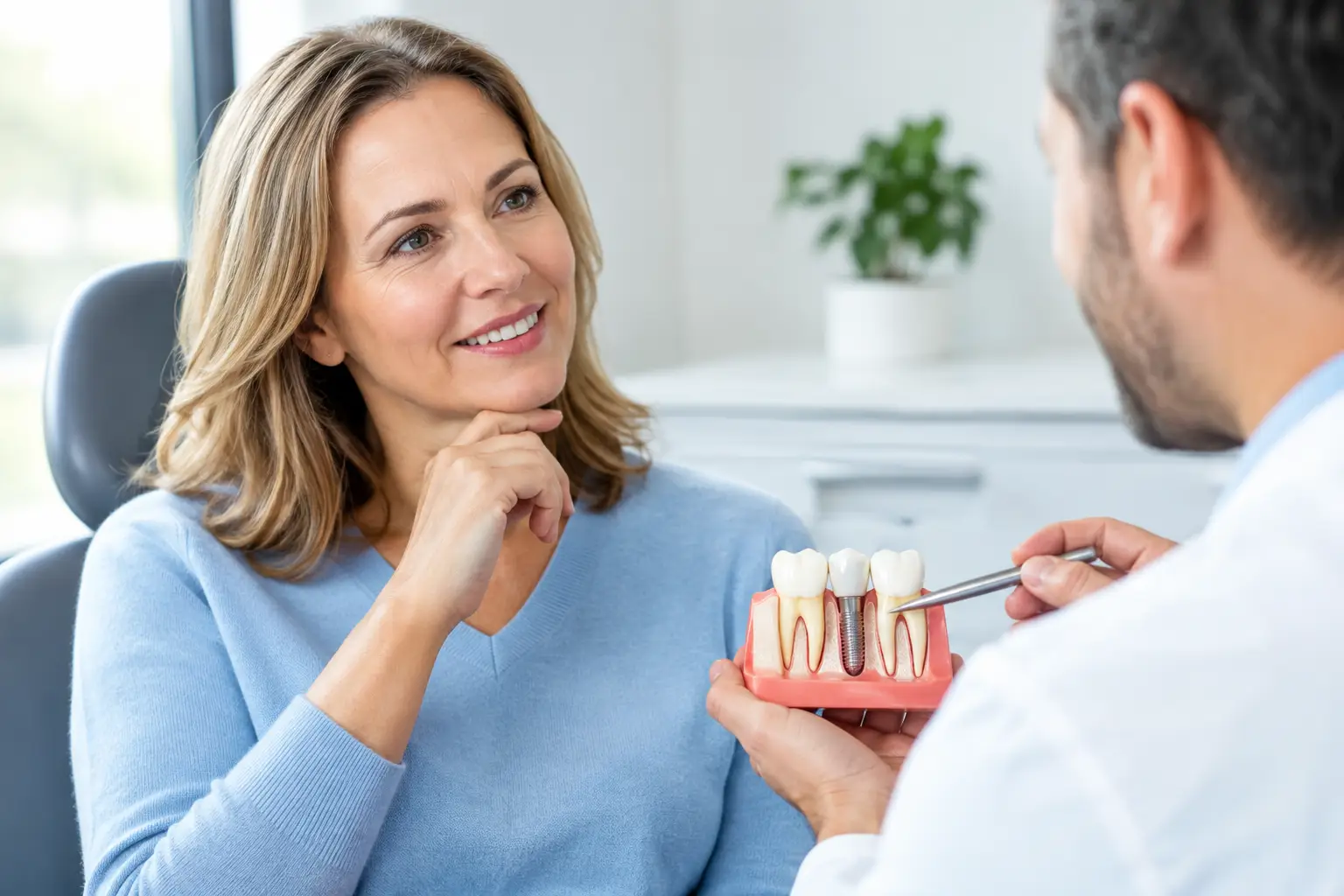
A missing tooth can affect far more than the way a smile looks. You may find yourself avoiding certain foods, feeling self-conscious when speaking or noticing that neighbouring teeth are beginning to shift. If you are asking, “am I suitable for dental implants?”, the encouraging answer is that many adults can be considered for treatment, including people who have been told in the past that they have bone loss or complex dental needs.
Dental implants are designed to replace the root of a missing tooth, creating a secure foundation for a crown, bridge or full-arch restoration. Suitability is never decided from a photograph or a brief conversation alone. It comes from a careful clinical assessment of your mouth, health and goals, followed by a treatment plan tailored to you.
Am I suitable for dental implants?
There is no single ideal implant patient. Age alone is rarely the deciding factor, and it is common for people in later life to benefit from implants. What matters more is whether treatment can be planned safely and predictably, with a result that looks natural, feels comfortable and is practical for you to maintain.
In broad terms, you may be a good candidate if you have one or more missing teeth, are bothered by a loose denture or bridge, have healthy or treatable gums, and are willing to care for your teeth and implants consistently. Implants can replace a single tooth, several teeth or a complete set of teeth, so the right solution depends on the extent and position of the gaps.
A consultation should also consider what you want from treatment. Some patients are primarily concerned with chewing comfortably again; others want to restore the appearance of a visible gap. Often, both matter. Discussing these priorities early helps ensure the proposed treatment suits your lifestyle as well as your clinical needs.
The key factors a dentist will assess
Gum health and periodontal stability
Healthy gums provide the best starting point for implant treatment. Gum disease does not necessarily rule out implants, but active disease needs to be controlled first. Bleeding gums, persistent bad breath, loose teeth or receding gums may indicate that treatment is needed before an implant is placed.
This is not simply a box-ticking exercise. The same bacteria and inflammation that can damage natural teeth may also threaten the tissues around an implant. With appropriate periodontal care, excellent cleaning and regular reviews, many patients with a history of gum disease can still go on to have successful implant treatment. They may, however, need closer long-term monitoring.
Bone quantity and quality
An implant needs enough healthy jawbone to support it. When a tooth has been missing for some time, the surrounding bone can gradually reduce in volume because it is no longer being stimulated by the tooth root. This is one reason it can be helpful to explore replacement options sooner rather than later.
A lack of bone does not automatically mean implants are unavailable. Modern planning often includes three-dimensional imaging to assess the jaw accurately. In some cases, a bone graft or sinus lift may be recommended to build a stronger foundation before implant placement. This can add time and cost to treatment, but it may make a stable, long-lasting result possible where it would not otherwise be appropriate.
Your general health and medical history
Your dentist will ask about your medical history, medications and any previous treatment. Conditions such as diabetes, osteoporosis, autoimmune disease or heart disease do not automatically prevent implant treatment. The important question is whether they are well managed and whether there are any risks that need to be addressed with your GP or specialist.
Certain medicines can affect bone healing or increase the risk of complications, particularly some treatments used for osteoporosis and cancer. It is vital to share a complete and up-to-date list of medicines, including injections and supplements. This allows your dental team to plan responsibly rather than making assumptions.
Smoking and vaping are also relevant. Nicotine can reduce blood flow and interfere with healing, increasing the risk of implant complications. Stopping smoking, ideally before treatment begins, gives the best chance of a successful outcome. If stopping feels difficult, be honest about it: your clinician can explain the specific implications for your treatment plan.
Your bite and remaining teeth
An implant crown should work in harmony with your bite. Heavy grinding or clenching can place extra force on both natural teeth and implants, so signs of tooth wear, jaw tension or frequent breakages will be assessed. A night guard may be advised after treatment to protect the restoration.
The condition of nearby teeth matters too. Occasionally, it may be better to treat decay, replace failing fillings or stabilise a loose tooth before proceeding. This joined-up approach protects the health of your whole mouth rather than focusing only on the gap.
When implant treatment may need to wait
Dental implants are usually elective treatment, which means there is value in taking the time to create the right conditions. An untreated infection, uncontrolled gum disease, poorly managed diabetes or a need for significant dental repairs may mean that implant placement is delayed. In younger patients, implants are usually postponed until jaw growth is complete.
A delay is not a rejection. It can be the safest route towards a more predictable result. During this period, a temporary tooth replacement may be considered where appropriate, particularly if the missing tooth is visible or affecting your confidence.
There are occasions when another option is more suitable. A conventional bridge may be considered if the teeth either side of the gap already require crowns, while a well-made denture may be the right choice for some patients based on their health, anatomy, budget or personal preference. A good consultation should explain the benefits and limitations of each option without pressure.
What happens at an implant consultation?
A consultation-led assessment gives you a clear understanding of what is involved before you commit to treatment. Your dentist will examine your teeth and gums, discuss your dental and medical history, and ask about your concerns and expectations. X-rays and, where required, a three-dimensional scan help assess the bone, nerves and spaces available for an implant.
You should come away knowing whether implants are likely to be suitable, what preparatory treatment may be needed and how long the process could take. Some cases are relatively straightforward; others involve grafting, gum treatment or staged care. Neither approach is inherently better. The appropriate approach is the one that gives you the best balance of safety, function, appearance and longevity.
It is also sensible to discuss aftercare. Implants cannot develop decay, but the gums and bone around them still need protection. Brushing carefully, cleaning between teeth or around implant restorations, attending hygiene appointments and having regular examinations are all part of looking after the investment you have made.
Questions patients often ask
Can I have an implant if I have worn a denture for years?
Often, yes. Long-term denture wear can be associated with bone loss, so detailed imaging is particularly useful. Depending on the amount of bone available, implants may support a fixed bridge or help stabilise a removable denture so it feels far more secure when eating and speaking.
Is treatment suitable if I am nervous about dentistry?
It can be. Feeling anxious is very common, particularly when considering surgical treatment. A calm discussion of each stage, time to ask questions and a clear plan can make the process feel more manageable. Tell your dental team what worries you, whether that is discomfort, needles, costs or losing control during appointments.
How long do dental implants last?
Implants are intended as a long-term solution, but they are not maintenance-free and no clinician can guarantee a lifetime result. Their longevity depends on careful planning, healing, oral hygiene, bite forces, smoking status and regular professional care. The crown attached to an implant may need repair or replacement over time, just as other dental restorations can.
The most useful next step is not to judge your suitability against a checklist online, but to have your individual circumstances assessed. At Russell Avenue Dental & Implant Centre in St Albans, a personalised consultation can turn an understandable question into a clear, considered plan for restoring your smile and confidence.